Dangerous Microplastics
Our Life in Plastic
More than 5 trillion pieces of plastic are floating in the world’s oceans. But plastic is not only omnipresent in our oceans. Plastic, synthetic materials, and microplastics have become an indispensable part of our modern society. But how do they behave when it comes to our health?
Avoid or eliminate microplastics?
Can we continue consuming as carelessly as before? Or should we think about alternatives? What exactly is plastic fasting? And what happens to nano- and microplastic particles that have already been absorbed by our bodies? Important questions that we will examine more closely in this article.
Microplastics – An Invisible Danger
If you google the term “microplastics,” alarm bells inevitably start ringing. Numerous alarming data and facts form the basis for the many critics. In 2018, a study by the Fraunhofer Institute for Environmental, Safety, and Energy Technology also issued a warning on the topic of “Microplastics and Synthetic Polymers in Cosmetic Products as well as Laundry, Cleaning, and Detergent Products.”
The study revealed that in Germany alone, 977 tons of microplastics and 46,900 tons of dissolved polymers enter our wastewater every year. Microplastics have therefore unfortunately become an integral part of our environment. Especially since the small plastic particles, with a diameter between 5 mm and 0.1 μm, are often mistaken for food by aquatic organisms or are ingested together with their food. The result: microplastics are absorbed from the digestive tract into surrounding tissue by various living organisms. It is now also known that microplastics ingested by mussels cause inflammation.
Data & Facts About Plastic and Microplastics
At the end of July 2020, the MNU Regional Association Berlin/Brandenburg e.V. reported current alarming facts on its website that suggest why “plastic fasting” is worthwhile:
- By 2030, there will be 80% more plastic waste worldwide than in 2018 (study by McKinsey & Company)
- Primary microplastics – i.e., industrially produced plastic items – are often not visible.
- At 50%, tire abrasion from car tires is the largest source. Shoe sole abrasion already follows next. Both enter our air through corresponding dust particles and are also washed into our waterways.
- When garments made of microfibers are washed, microplastic particles are also released.
- Although 95% of microplastics are filtered out by wastewater treatment plants, the rest returns to the environment (as soon as sewage sludge is used for fertilization in agriculture due to a lack of incineration capacity.)
“Humans will keep destroying their environment until they can create it for themselves out of plastic.”
Damaris Wieser, German lyricist and poet

Our Plastic Planet Earth
However you look at it, it is undisputed that plastic is omnipresent and, according to a study by UNEP (United Nations Environmental Programme), now accounts for around 80% of all waste in the ocean. With 675 tons of waste per hour worldwide, that is an enormous amount. However, the problem is not only the pollution and littering of our planet, but also the hazardous substances contained in plastic that can affect our health.
Not All Plastic Is the Same
If you look at the topic holistically, it is essential to differentiate between the various types of plastic: because the different types have very different implications for our organism. It is worth taking a closer look at the bottom of packaging or bottles – even better: practice “plastic fasting” and opt for glass bottles instead, while strictly avoiding plastic products wherever possible. But what effects are the respective types of plastic supposed to be responsible for? Where are they found, and how can I avoid microplastics?
Bisphenol A – Classified as a “Substance of Very High Concern”
When you look at the effects of this chemical, you inevitably become very worried. This substance is contained as a plasticizer in polycarbonate and can be found, for example, in food packaging or plastic tableware. Since the chemical is absorbed through the oral mucosa and can be released by hot liquids, even the intake of the smallest amounts of this substance can cause major damage to health. Since it is a hormonal chemical, hormonal disorders such as uterine cysts, hormone imbalances, or lymphomas may result. Cancer, Parkinson’s disease, liver problems, diabetes, and ADHD also appear to be associated with bisphenol A.
Phthalates – Plasticizers That Pack a Punch
And quite a punch at that! Phthalates (DEHP, DIBP, BBP, DBP, and DIPP) can be found in a wide variety of everyday products. Whether in films, PVC flooring, textiles, food packaging, etc., these plasticizers are commonly used by industry whenever plastics are to be made elastic and flexible. Since phthalates are not chemically bound to the plastic, they can unfortunately also escape easily. The chemical quickly enters indoor air or household dust and can thus be absorbed by humans through the air they breathe. Intake through food is also a potential source of danger. The Austrian Environment Agency also comments on its website about the concerning health damage. It mentions impairment of male reproduction, damage to the liver, nerves, and immune system, as well as obesity and diabetes.
PAHs – Highly Concerning Plasticizers
In our daily lives, it is difficult to avoid contact with PAHs, i.e., polycyclic aromatic hydrocarbons. This is because not only do hundreds of these substances exist, but they are also found in a wide variety of products and are emitted, for example, by car exhaust fumes. It is particularly concerning that the EU Scientific Committee on Food has even classified 15 of the approximately 250 known PAHs as carcinogenic. The problem: other compounds are also considered highly concerning. For this reason, maximum levels in foods have been adopted for selected polycyclic aromatic hydrocarbons. Unfortunately, however, these limits are often not observed. For example, in its 2015 test of gourmet oils, Stiftung Warentest identified 23 of 25 tested products as containing PAHs and even found two products to be unfit for sale.
What Can You Do About Microplastics in the Body? Our Tip!
Plastic Fasting
In principle, we advise you to practice strict plastic fasting. Try to avoid plastic wherever possible. So choose glass bottles rather than plastic bottles. Even better: filter your water yourself and drink purified tap water. With plastic fasting, you are doing good not only for the environment but also for your health. However, since you can also come into contact with harmful plastic substances through the air and environmental influences, and unwanted substances can increasingly accumulate in your tissue as a result, we recommend supporting your body’s own detoxification processes.
Recommended Products
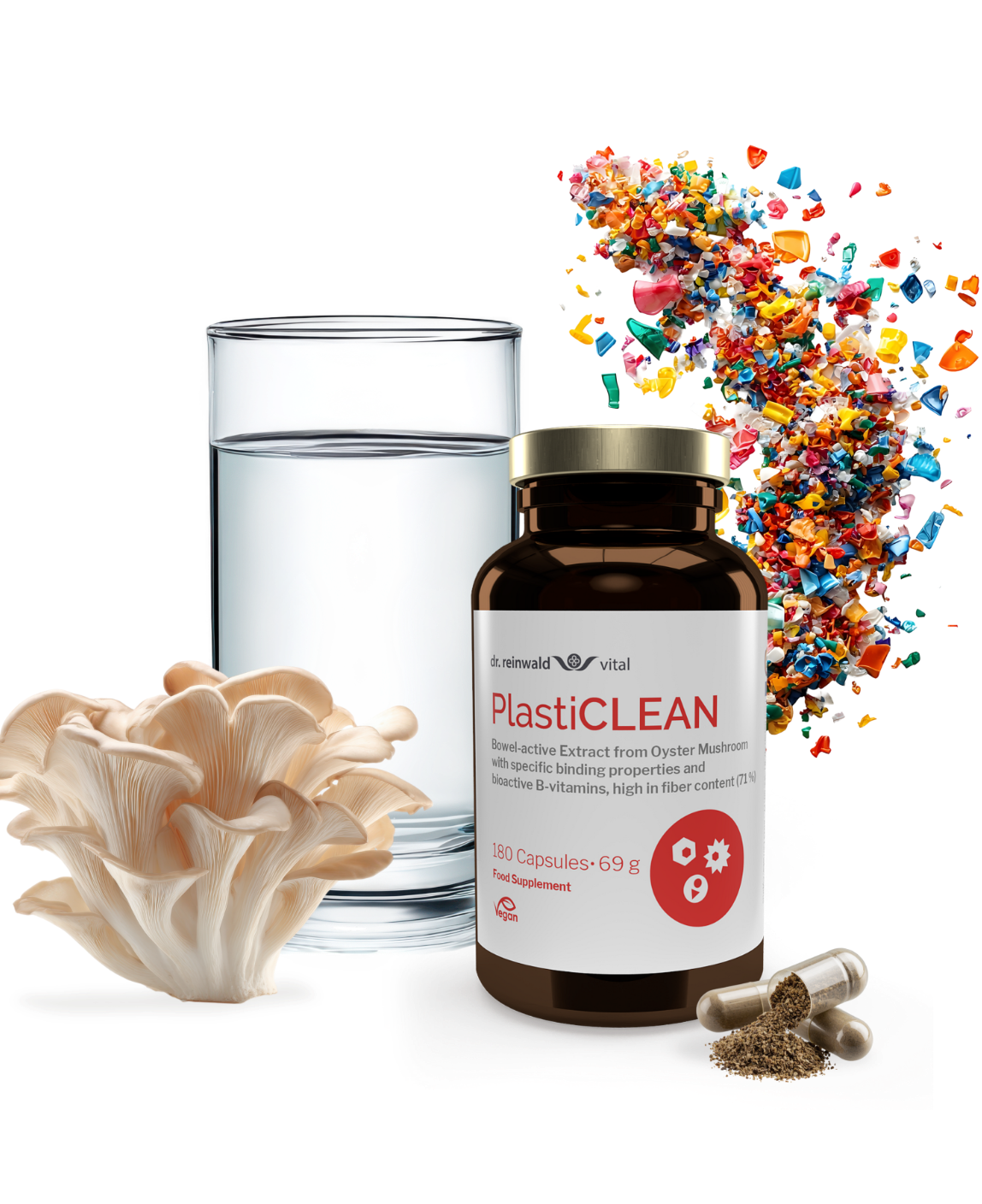
For this, we can warmly recommend our high-quality CLEAN range: first and foremost our product PlastiCLEAN with vegan chitosan extract from oyster mushrooms. It is therefore no surprise that chitosan has long been used in environmental technology and agriculture because of its natural antimicrobial and antifungal effect. Chitosan also helps biologically prevent unwanted fungal growth in the preservation of foods such as fruit and vegetables. Our other Clean products can also support you and your body in its daily detoxification work.
Vegan Chitosan Fiber from Oyster Mushroom
With PlastiCLEAN, you receive a detox* product that supports you in dissolving, binding, and relieving the burden of so-called “unwanted substances” such as microplastics. Thanks to the specific binding properties of the oyster mushroom chitosan fiber and the bioactive B vitamins, nonpolar substances can be bound in the intestine and thus gently cleansed and relieved.
Vegan support for your body’s own detoxification
100% Natural Micropectin Fiber
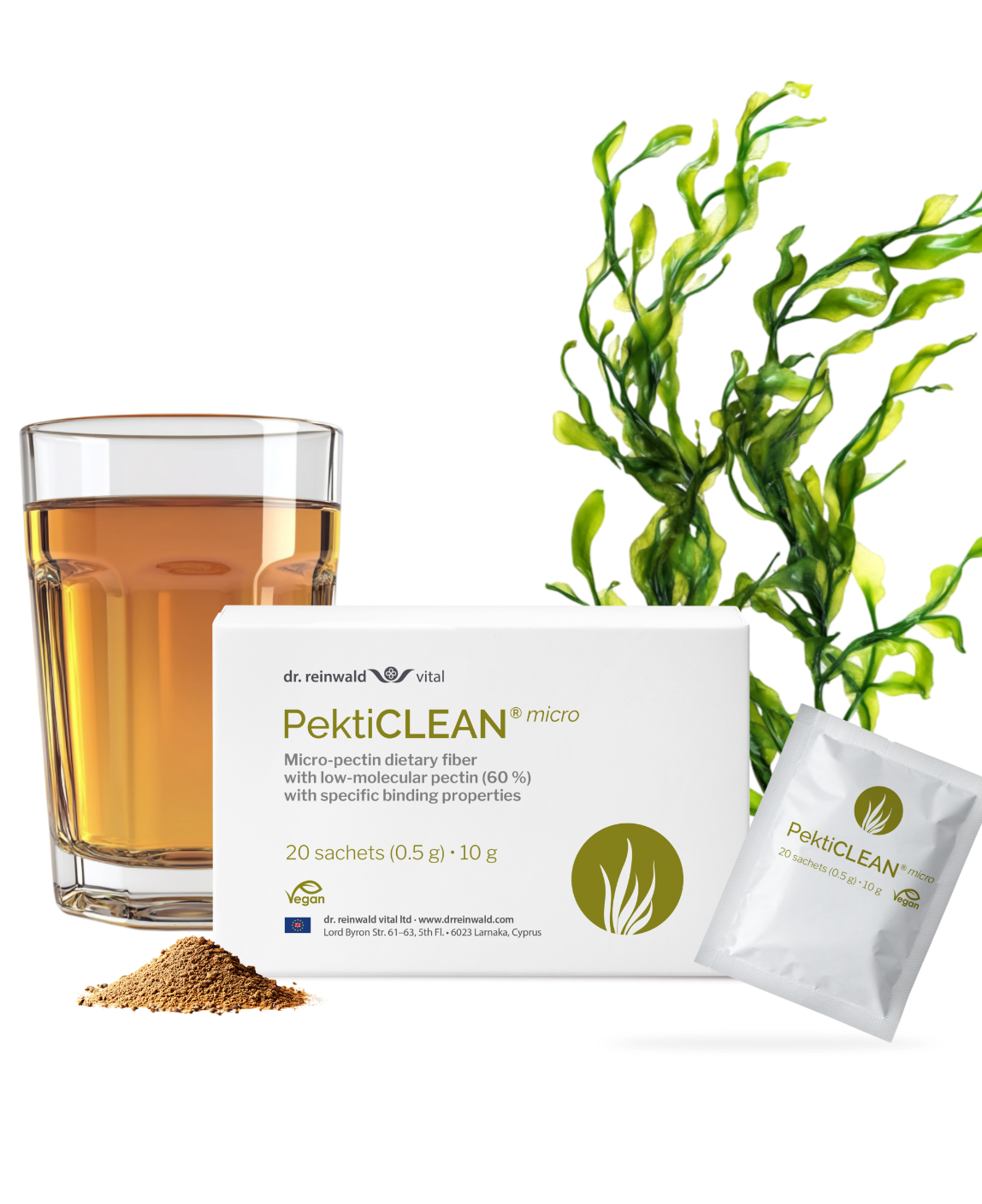
With PektiCLEAN® micro, you receive a vegan vitality product that cleanses your body cells and thus contributes to dissolving, binding, and relieving the burden of unwanted substances such as heavy metals. This is achieved through the high proportion of low-molecular-weight pectin (60%).
Vegan support for your body’s own detoxification