Vitamin D – the sunshine vitamin for the whole year
Vitamin D is considered THE vitamin for the health of our bones. What many people don’t know: Vitamin D is one of the most important nutrients when it comes to strengthening our immune defenses and effectively preventing infections! This is because it plays a crucial role in many vital processes in our body. However, the assumption that we get enough vitamin D from sunlight in summer is a myth. The result: 60 to 85 percent of Germans suffer from an insufficient vitamin D supply. We explain why vitamin D is so important for our body and why we recommend general supplementation.
What exactly is vitamin D?
Vitamin D occupies a special position among vitamins. Unlike all other vitamins, it can be produced by the body itself. However, only under one condition: when sufficient sunlight in the form of UVB radiation acts on the skin. This is also where the term “sun hormone” comes from. Strictly speaking, vitamin D is not a vitamin at all, but a so-called prohormone, i.e. the precursor of a hormone. Our organism first converts vitamin D into the biologically active hormone calciferol.
Vitamin D is the umbrella term for several fat-soluble compounds. The best known are vitamin D2 (ergocalciferol) and vitamin D3 (cholecalciferol). The latter is considered more effective because it is converted directly into the active form calciferol in the liver and kidneys. In addition, the body can form the storage form, known as calcifediol, from vitamin D3. The body’s own storage depots are found primarily in our fat and muscle tissue; smaller amounts are also found in the liver. Vitamin D2 must first be converted into vitamin D3 before it becomes effective. With optimal sun exposure, the stores can last for a few months. This also explains why the typical cold season begins at the end of October and then reaches its peak in February.
Getting vitamin D through food?
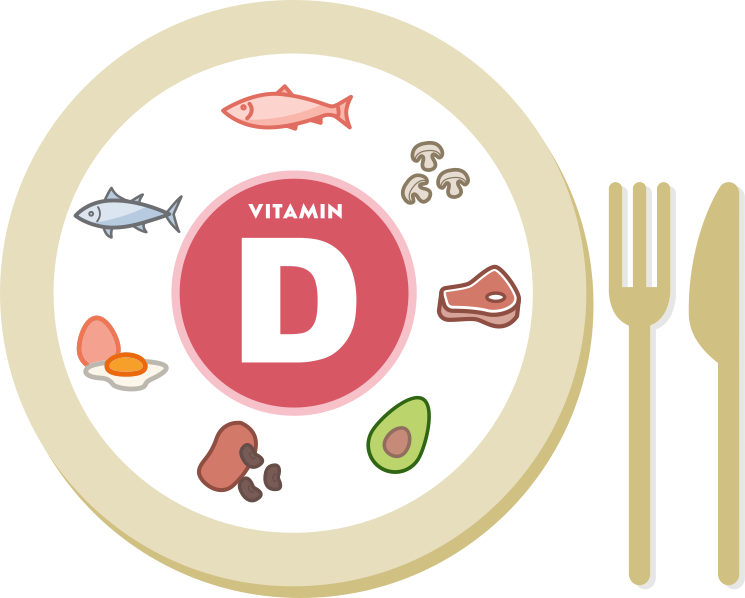
There are only a few foods that contain vitamin D in noteworthy amounts. These include fatty fish, liver, offal, eggs, some mushrooms, and avocados. Since the vitamin D contained in food is by no means sufficient as the sole source, nutrition plays a subordinate role in our supply.
Why is vitamin D so important?
Vitamin D is a true all-rounder that is necessary for numerous important metabolic processes in our body.

- Immune system
… is essential for our body’s own defenses. It activates our immune cells, the so-called T lymphocytes, with which the immune system defends itself against invaders. By taking vitamin D daily, you can demonstrably prevent infections (such as influenza or tuberculosis) or mitigate their course.
- Bones
… plays a key role in the mineralization of our bones. It promotes the absorption of calcium and phosphate from the intestine and the incorporation of both substances into bones and teeth. This keeps them stable, hard, and strong.
- Muscles
… supports the formation of muscle cells and muscle fibers, which is essential for normal muscle function and muscle strength. It also regulates the coordination of our muscles.
- Cardiovascular system & blood vessels
… has a positive effect on our cardiovascular system by helping to regulate blood pressure and heart contraction. In addition, it prevents the formation of so-called “foam cells,” which are responsible for the deposition of plaques in the blood vessels.
- Nervous system
… has a protective effect on the nerve cells in the brain. According to recent research findings, it could even play an important role in the prevention of diseases such as depression, dementia, multiple sclerosis, and stroke.
- Type I and II diabetes
… lowers blood sugar levels and optimizes insulin metabolism. Minimizes the risk of developing type I or II diabetes.
- Fertility
… increases fertility, supports a normal course of pregnancy, and has been shown to reduce the risk of premature birth. Women should therefore make sure they have an adequate supply of vitamin D during pregnancy.
An optimal supply of vitamin D is therefore not only essential for our physical performance and our immune system, but also for the prevention and treatment of numerous chronic and serious diseases.
Vitamin D deficiency – the silent widespread disease
Statistical analyses show that 60 to 85 percent of all Germans have vitamin D levels that are too low. Nevertheless, 75 percent of those affected do not take any dietary supplements. But how does such a widespread insufficient supply occur when all we would have to do to produce vitamin D is go out into the sun? One aspect is certainly that the importance of an adequate vitamin D supply was underestimated for a long time and, in many cases of complaints or illnesses, no investigation was carried out to determine whether there was a deficiency.
In order to produce the required daily amount for an adult, spending 15 to 30 minutes outdoors around midday during the summer months is sufficient, preferably wearing shorts and a short-sleeved shirt and without sunscreen. So much for the theory. But in our modern world, where we spend most of our time indoors, who has the opportunity to sunbathe lightly dressed at midday every day?
In addition, the body’s own vitamin D production depends on additional factors such as latitude, weather conditions, and skin type. The darker the skin, the more sunlight is needed, for example, for sufficient vitamin D production. From October to March, it is impossible in our latitudes to absorb enough vitamin D through sunlight, as the sun is much too low during these months. A vitamin D deficiency is therefore inevitable. If we are then unable to replenish our stores in summer due to our lifestyle, it is no wonder that a large part of the population suffers from an insufficient supply.
Our tip: With a laboratory test, you can easily have your vitamin D level checked.

“There is sun in every person.
You just have to make it shine.”
Socrates
How does a vitamin D deficiency become noticeable?
rnIn infants and young children, a vitamin D deficiency can lead to rickets, as the bones are not sufficiently mineralized, remain soft, and become deformed. rnrnPerhaps you also know this from stories told by your parents or grandparents: In the post-war period, weakened and undernourished children were given cod liver oil to prevent illness and rickets. Even decades later, the foul-tasting fish oil had a permanent place in many home medicine cabinets. No wonder, because in addition to important fatty acids, fatty fish and cod liver oil also provide valuable vitamin D. rnrnBut vitamin D deficiency can also have far-reaching consequences in adults: from complaints such as fatigue and difficulty concentrating, muscle weakness or pain, and susceptibility to infections to serious diseases such as osteoporosis, allergies, and rheumatism – the list of symptoms and diseases associated with vitamin D deficiency is long.rnHow much vitamin D is good and sensible?
rnWe recommend regular supplementation with vitamin D – unless otherwise discussed with your doctor or therapist – at a standard dose of 5,000 IU per day for 70 kg body weight. rnrnIn order to replenish vitamin D stores in the case of an insufficient supply, or in the event of an acute infection or illness, a higher dosage of up to 10,000 IU per day makes sense for a certain period of time. rnrnIt is best to coordinate this with your doctor or therapist.rnrn
Synergist vitamin D: strong as part of a team
For a long time, vitamin D was considered in isolation in therapy and treatment, especially with regard to bone health and cardiovascular diseases. Today, however, we know that vitamin D is closely connected with other nutrients, and only in combination with certain other nutrients, the so-called cofactors, can it work properly.
Calcium and phosphorus
Vitamin D plays an essential role in the absorption of calcium and phosphorus from the intestine, both of which in turn are involved in bone formation and energy metabolism. Vitamin D is therefore important for bone health, but in this context it only acts as a kind of mediator, i.e. it can only develop its full effect when there is also an adequate supply of calcium and phosphorus.
Vitamin K
When taking vitamin D, an adequate supply of the rather lesser-known vitamin K should also be ensured at the same time. Vitamin K directs excess calcium from the blood into the bones and thus ensures that the calcium is not deposited in the tissue, in the blood vessels, or in the form of kidney stones. While vitamin D promotes the absorption of calcium, vitamin K2 ensures that it is not misdistributed in the body.
Magnesium
Our body needs magnesium to convert vitamin D into the biologically active hormone calciferol. Without magnesium, the body cannot properly utilize vitamin D, and its effectiveness remains severely limited. Or to put it another way: since magnesium is consumed during the conversion of vitamin D into its active form, taking vitamin D also requires an adequate supply of magnesium at the same time so that a magnesium deficiency does not occur.
Zinc and boron
The trace elements zinc and boron also interact with vitamin D. Zinc is needed for the formation of vitamin D receptors, while boron improves the effect of vitamin D and regulates the metabolism of certain micronutrients such as magnesium, for example. A severe zinc or boron deficiency can also have a negative effect on the function of vitamin D.
VitaDK plus – vegan power complex from dr. reinwald vital
Our newly developed, highly effective VitaDKplus complex with vitamin D3 + K2 and the cofactors magnesium, zinc, and boron addresses exactly this: the high synergy effect guarantees you optimal biocompatibility and effectiveness – for quickly replenishing the body’s stores as well as for your daily supply. All nutrients are free from additives, doping substances, and allergens and are 100% vegan.
We recommend taking vitamin D, as a fat-soluble vitamin, in combination with a little fat. Studies have shown that taking it with 11 g of fat (e.g. hemp oil, linseed oil, olive oil, avocado, almonds) leads to optimal absorption.
Do you feel this applies to you or do you have questions? Our friendly team – consisting of therapists and naturopaths – will be happy to advise you on all aspects of vitamin D or our new product VitaDKplus. Call now or use our chat.