The Power of Qi – a Life of Health and Balance
Do you know the feeling? On some days you feel energetic, strong, and full of vitality. And then there are those days when you feel drained and as if someone has pulled the plug on you. In Chinese, Qi, or Ch’i, refers to our life energy – the energy that underlies everything and permeates everything. In Traditional Chinese Medicine, the free flow of Qi is the foundation of our physical, mental, and emotional well-being. Stress, negative thoughts, an unbalanced diet, or lack of exercise can disrupt this flow.
Qi – everything in flow
In Traditional Chinese Medicine (TCM), Qi is also referred to as the “power of heaven.” The term Qi, or Ch’i, comes from Chinese Daoism, the ancient Chinese teaching of wisdom. Qi corresponds to the Indian concept of Prana and refers to the active life energy that is the prerequisite for all living things. According to the holistic approach of TCM, Qi is not only the foundation of our physical health, but also the basis for our joy of life, ability to act, self-confidence, and radiance.
But where does Qi actually come from? We receive part of our life energy from our parents even before birth. It is also referred to as Original Qi. There are many other forms of Qi, including Food Qi and Breathing Qi.

»All illness is connected with the state of Qi.«
Huang Di Nei Jing
(one of the oldest medical textbooks on the foundations of TCM)
The Law of Balance
You can imagine the consumption of our life energy like a candle burning down. It is important that we treat our Qi mindfully and with care, and do not unnecessarily disrupt the flow of energy through stress, negative thoughts, or an unhealthy lifestyle.
In addition to Qi, there are other central elements in TCM. These include the functional systems, the theory of the elements, the phases of transformation, and Yin and Yang. Yin and Yang are the two forces that are inherent in every living being, all things, and every event. Yin stands for the feminine, rest, darkness, and cold, while Yang embodies the masculine, activity, brightness, and warmth. Yin and Yang are therefore polar opposites and yet always related to and connected with one another.
We are healthy when Qi can flow undisturbed and Yin and Yang are in balance. A weakening, a blockage, but also an excess of Qi, as well as an imbalance between Yin and Yang, can make an organ or our entire organism ill. The aim of treatment in TCM is always to balance these disharmonies so that Qi can flow freely again and the balance between Yin and Yang is restored.
The Functional Systems in TCM
In TCM, the term organ goes far beyond its purely anatomical meaning. Individual organs are never considered in isolation, but always in connection with the overall system. This is based on the assumption that all organs and all bodily functions always influence one another. The organs not only perform physical tasks; they also house the various emotional and mental forces that are reflected in our thinking, feeling, and behavior. The entire organ system (“Zang fu”) consists of individual functional systems.
A distinction is made between five Yin functional systems (“Zang”) and six Yang functional systems (“Fu”). The Yang functional systems include the stomach, the small and large intestines, the bladder, the gallbladder, and the Triple Burner. The five Yin functional systems are considered the supporting pillars of TCM. Each of the functional systems is connected to a main meridian through which Qi flows through the body.
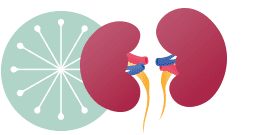
Kidney Functional System
Root of Life Energy
In TCM, our kidneys are of central importance. They are considered the carriers of Jing, our life essence. They are therefore regarded as the “root of life energy.” The corresponding Yang organ is the bladder.
A deficiency of Kidney Yang can manifest itself in symptoms such as lack of drive, fatigue, nighttime urination, or excessive sensitivity to cold. A Kidney Yin deficiency may manifest, among other things, as insomnia, inner restlessness, memory problems, or back pain. According to TCM, our willpower, courage, and drive also reside in the kidneys, which is why an imbalance in kidney energy can also be a cause of burnout syndrome.

Heart Functional System
Home of the Shen
The Heart functional system controls the circulation of our blood as well as other bodily fluids, and it regulates our blood vessels. To have enough strength for these tasks, the heart needs sufficient Qi. According to TCM, the Shen resides in our heart; this is the spirit that guides our emotions, our emotional sensations, our consciousness, and our subconscious. The corresponding Yang organ is the small intestine.
Signs of weakened Shen can include concentration and sleep disorders, inner restlessness, and a lack of joy in life, even extending to depression.
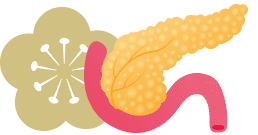
Middle Functional System
Spleen and Pancreas
In TCM, the spleen and pancreas form one functional system. Together with the stomach as the corresponding Yang organ, they are the basis of our digestive power, i.e. the transformation of our food into Qi and blood. The spleen and pancreas are considered the pivotal point of the Qi flow, which is why they are also referred to as “our center.”
Numerous illnesses can be traced back to a weakness of spleen energy. A deficiency can manifest, among other things, in digestive complaints, food intolerances, allergies, varicose veins, concentration problems, lack of energy, and fatigue. The Middle functional system is also responsible for an intact immune system.
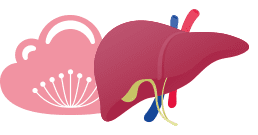
Liver Functional System
Fountain of Vitality
In TCM, the liver is primarily responsible for releasing and allowing Qi to unfold freely, as well as for storing blood. When the liver is well, Qi, our blood, and our emotions are also in flow. The corresponding Yang organ is the gallbladder.
In TCM, an overburdened liver is referred to as “liver heat.” If liver energy is stagnant, anger or aggression may occur. Conversely, unexpressed anger can lead to disharmony in the Liver functional system. This can manifest, among other things, in the form of headaches, rage, tension, or high blood pressure. Menstrual problems or complaints also usually indicate an imbalance in the liver.

Lung Functional System
Mistress of Qi
The Lung functional system takes in pure Qi from the air we breathe and expels impure Qi. The lungs distribute Qi throughout our body and are therefore responsible for the entire flow of Qi, which is why they are also regarded as the “Mistress of Qi.” In our chest area, the pure Breathing Qi mixes with the Food Qi from the spleen. The corresponding Yang organ is the large intestine.
Blocked Lung Qi can manifest particularly through disorders in the respiratory organs, for example bronchial asthma, chronic bronchitis, shortness of breath, or susceptibility to infections. If the Lung functional system is in harmony, our immune system is also intact.

The Five Pillars of TCM –
(Traditional Chinese Medicine)
The aim in TCM, then, is to detect and eliminate blockages in the flow of life energy and imbalances. As part of holistic treatment, various therapeutic methods are usually combined, the so-called “Five Pillars of Chinese Medicine.” In addition to acupuncture, forms of movement such as Tai Chi and Qi Gong, nutrition, and certain forms of massage, herbal medicine is one of these pillars.
Herbal Medicine
Herbal medicine is as old as humanity itself. For thousands of years, it has been one of the most important components of the healing arts in all cultures.
In Chinese herbal medicine, plant parts such as roots, bark, flowers, and leaves are used above all, but mineral and animal components are also used. As a rule, various herbs and substances are combined with one another, in keeping with the motto: the whole is more than the sum of its parts.
Herbal medicine also has a long tradition in our European cultural sphere. Most people here will probably think of Hildegard von Bingen (1098–1179). Similar to TCM, the famous mystic developed a classification of European medicinal plants. In addition to herbal medicine, nutritional therapy, elimination therapies, and gemstone therapy were essential aspects of her holistic healing art. In her pioneering works, she compiled the knowledge of her time from the world as it was then known.
No matter which cultural sphere – all approaches have one thing in common: they view the human being as a whole, with the aim of healing, relieving pain, and strengthening and preserving life force through the support of plants.
Why do our Qi extracts contain alcohol?
In small amounts, alcohol not only has a positive influence on our nervous system; according to TCM, it also gets our Qi flowing and promotes the absorption of valuable bitter compounds through our oral mucosa. Unlike alcoholic beverages, the highly effective plant components in our herbal extract bitter aperitifs are dosed so highly that you only need a small amount each day. Because here, too, the guiding principle naturally applies: “The dose makes the poison.”