Why are proteins so important in old age?
Article series: Proteins – building blocks of our lives
We humans are living longer and longer. Just a few decades ago, people in their mid-sixties were considered old; they were usually retired and lived a quiet, tranquil life. Today, most of us want to stay active well into old age, travel… in short, enjoy life. But what determines whether and to what extent we remain fit and agile into old age? Proteins, the building blocks of our lives, play an essential role here. Because it has now also been scientifically proven: older people need more protein than previously thought. Seniors in particular should therefore make sure they have a good protein supply.
What happens during aging?
Physical changes in old age
One foundation of our life is cell division. It enables our growth and ensures that our organs or injured tissue regenerate again and again. With every cell division, the so-called telomeres, the ends of the chromosomes in the cell nucleus, become a little shorter. Once a critical minimum length is reached, the cells can no longer divide or they die. This process is one of the most important foundations of the extremely complex aging process. By the way: an unconscious lifestyle with stress, an unhealthy diet, little exercise, and/or smoking can accelerate the shortening of telomeres. Too much UV radiation, too little sunlight for the body’s own vitamin D production, medications, or free radicals can also cause lasting damage to our cells.
»One remains young as long as one can still learn,
adopt new habits
and endure contradiction.«
Marie von Ebner-Eschenbach
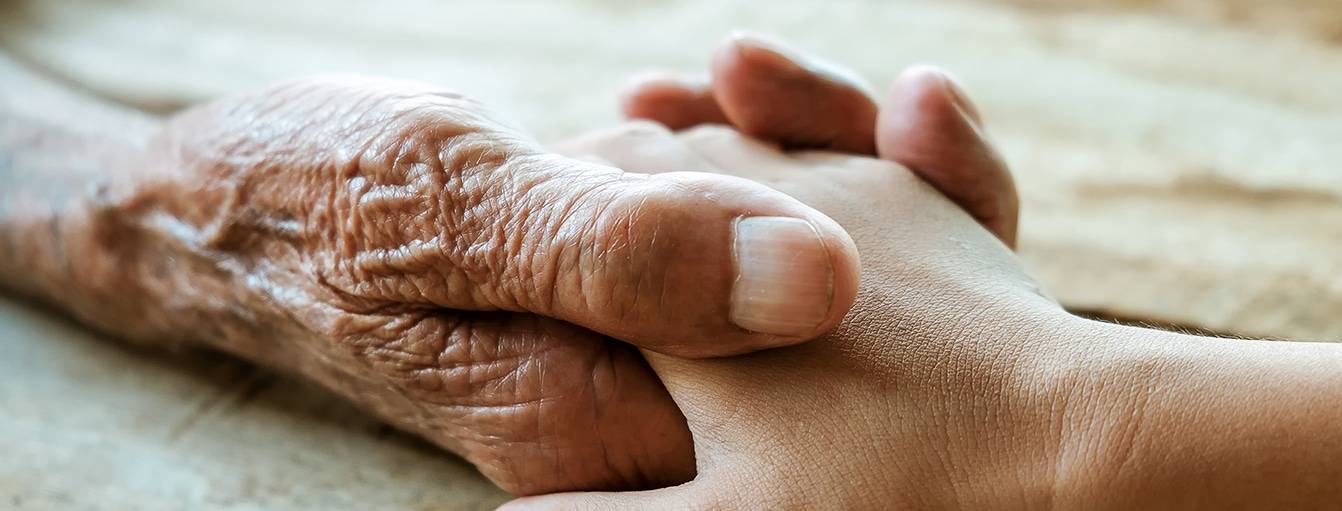
The number of cells in many organs noticeably decreases over the years, which also affects their ability to function. Nerve cells in the brain and immune cells also decrease with advancing age and therefore work more slowly. Aging also becomes noticeable in our sensory organs and musculoskeletal system: bone density decreases, the vertebrae change, cartilage tissue becomes thinner, ligaments and tendons lose elasticity, and connective tissue becomes slack. Our skin becomes more elastic and thinner. Hair loses its color pigments, becomes finer, and partially falls out. In addition, there is age-related loss of muscle mass, which usually begins as early as around the age of 30.
The cause of diseases in old age
For a long time, minor aches and pains, as well as diseases associated with aging, were regarded as natural side effects of this aging process. Today we know that most of these conditions are caused by malnutrition or poor nutrition in the sense of an inadequate supply of nutrients. Protein deficiency in particular leads to far-reaching consequences for our health, especially in advanced age.
But first, the good news to reassure you: it is in our own hands! Because if most age-related complaints and diseases are the result of malnutrition, it is also possible to reverse this process through an appropriate supply of nutrients!
Malnutrition in old age
The causes of malnutrition in old age are varied. Not only do our eating habits change over the years due to altered chewing ability, taste and smell perception, lower energy expenditure, or declining appetite; the body’s own digestive and detoxification powers, and thus the ability to utilize protein, also decline more and more with increasing age. In addition, there are often illness-related problems such as difficulty swallowing, chronic pain, or loss of appetite and gastrointestinal complaints as side effects of medications.
The result: in old age, we eat an unbalanced diet or less than we did when we were young. This can easily lead to an undersupply of essential proteins, vitamins, minerals, and trace elements, causing muscle mass to break down and the immune system to become increasingly weakened. We become more susceptible to infections and other diseases.
Protein deficiency in old age
Protein deficiency in particular has devastating consequences in old age. Because without proteins, nothing in our body works. As the building blocks of our lives, proteins or amino acids are absolutely essential for our muscles, ligaments, and bones, but also for our immune system and our entire metabolism. Adequate protein intake is therefore of central importance in old age.
The following symptoms may indicate a protein deficiency in older people:
- Breakdown of body tissue or muscle mass (atrophy) with a simultaneously high proportion of body fat
- Muscle weakness with an increased risk of falling
- Poor immune defense and delayed recovery
- Poorly healing wounds
- Hair loss
- Edema (water retention in the tissue)
- Weight loss without reducing calories
- General weakness
- Reduction in organ mass and impairment of organ functions
- Decline in performance
Preventing protein deficiency in old age
At first glance, the logical consequence would be to change the diet toward foods low in sugar and carbohydrates and instead rich in protein. However, we are convinced that most people will find it rather difficult to change cherished eating habits in advanced age. In addition, there are other reasons which, in our experience, absolutely argue against suddenly eating more dietary protein at 60+:
Reduced kidney function in old age
Compared with their younger years, a 70-year-old person has only 30 percent of their kidney function left. The kidneys also have less and less cell mass as age progresses. Accordingly, the volume and weight of the kidneys decrease, and with them, of course, their ability to excrete nitrogen waste. Even if older people were to completely change their diet and eat significantly more animal proteins in the form of meat, fish, or poultry, the kidneys would not be able to digest the amounts of protein they are not used to, or they would simply be overwhelmed by the amount of nitrogen waste produced.
Declining digestive capacity in old age
With acidic stomach digestion, the situation in old age is similar to declining kidney function: pepsin digestion can be reduced by up to 60 percent in older people. The liver’s detoxification capacity, i.e. its ability to break down ammonia, also declines. However, an excessively high blood ammonia level can have fatal consequences due to its cell-toxic effect. An elevated blood urea level can also cause further damage.
Older people therefore often unconsciously restrict their protein consumption because they can no longer tolerate these foods due to declining digestive capacity and the relatively increasing burden of nitrogen waste. They sense that they feel less well after a protein-rich meal. But this begins a vicious cycle of reduced protein utilization and reduced protein intake. The insufficient supply of proteins leads to a breakdown or conversion of lean cell mass into fatty tissue, which progresses rapidly when lack of exercise is added.
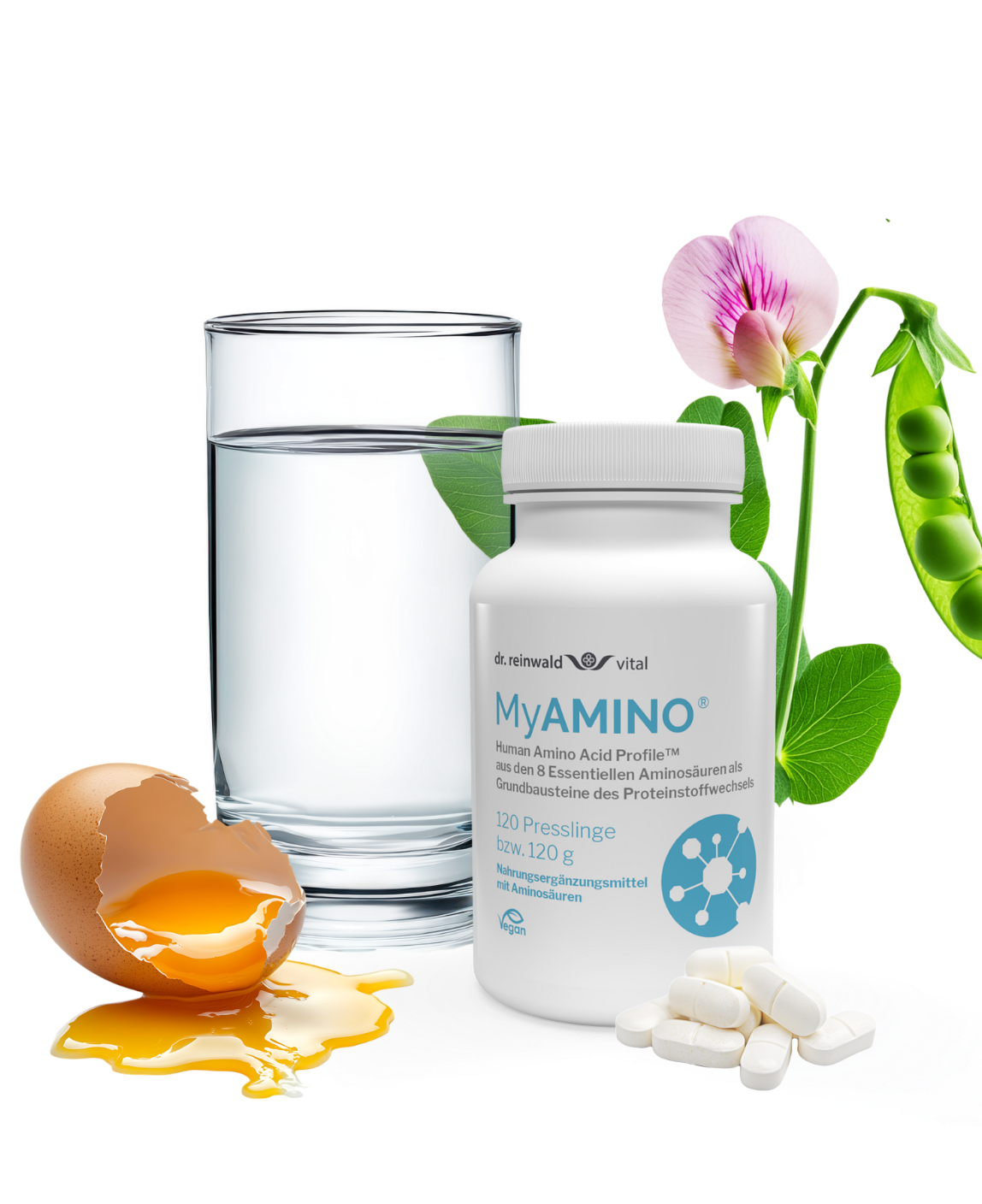
So what should be done? We have the solution: MyAMINO®, the revolution in protein nutrition.
MyAMINO® – healthy protein supply in old age
With MyAMINO® we have developed a globally unique protein product that allows you to supply your body with a high proportion of highly pure amino acids and that produces virtually no nitrogen waste (< 1%). This makes it ideal for your protein supply well into old age, without at the same time burdening the detoxification organs such as the liver, kidneys, and lymphatic system. Another advantage is that no digestive end products are produced in the intestine, which in turn helps relieve the digestive system and, consequently, also the cardiovascular system. In this way, the body is not only relieved, but after just 23 minutes of digestion time it is perfectly supplied with high-quality amino acids and 0.1 kcal per MyAMINO® tablet. In combination with moderate and regular exercise such as short walks or light exercises adapted to age and fitness level, you can effectively prevent muscle loss and even build muscle mass. According to many of our customers, the increase in vitality and quality of life feels like a true fountain of youth. No wonder, because with MyAMINO® you choose – in contrast to fish, meat, eggs, soy, or other protein sources – the protein product with the world’s highest net utilization. You can find more vital products for the best years of your life here.
You might also be interested in: Why are amino acids so important for our body?