Fiber – why is intake so important?
Everyone should now know that fiber is an important part of a balanced diet. However, what fiber actually is, why it is so important for our body, how and where we find it, and above all in what quantity we should consume it, is usually not known.
So it is high time to take a closer look at the topic and examine this nutritional classic with fresh knowledge.
Important helpers in a healthy diet
To get straight to the point: fiber is by no means a burden, but is now recognized as one of the “best friends” of our gut and our microbiome. A fact that, in this form, was not widely accepted among doctors and nutritionists for a long time. To understand this, it is therefore also very important to know what fiber actually is.
What is fiber?
When we talk about fiber, we generally mean fiber-rich and swelling components in plant-based foods that are largely indigestible for our body. In general, these are further divided into insoluble and soluble fiber, which above all have one thing in common: the enzymes present ensure that our gastrointestinal tract cannot break them down, or can only break them down incompletely. The result: the fibers are not decomposed there and are excreted again undigested.
Why that is good!
Understandably, you may now wonder why these indigestible components should be good for the body at all… Incidentally, this is exactly the reason why fiber was long considered useless in professional circles… 🙂 Today, the question can be answered relatively simply, but in a rather complex way. To put it briefly: fiber can not only get your digestion going, but can also make an important contribution to health prevention.
What effect does fiber have?
Water-insoluble fiber – which consists of the outer layers of cereal grains – can bind water particularly well because of its coarser structure and thus swell in the intestine. The result is that stool volume is increased, the intestinal contents can be transported onward more quickly for excretion, and more active digestion can thus be stimulated. Soluble fiber, such as that found in fruit, vegetables,
nuts, berries or bran, also attracts water. Unlike insoluble substances, these are broken down by bacteria in the large intestine and thus serve as valuable food for the microbiome.
In addition to these effects, both fiber groups have one thing in common: they cause blood sugar levels to rise more slowly after meals, which in turn means less insulin is released. In addition, the valuable plant fibers can also bind bile acids, which are involved in fat digestion in the intestine. A large review study by the University of Harvard also showed how effective a fiber-rich diet can be in preventing colon cancer. It found that among more than 700,000 study participants, the more fiber they ate each day, the fewer people died.
What types of fiber are there?
- Insoluble fiber (which swells in the intestine and is then excreted):
Cellulose, hemicellulose, lignin - Soluble fiber (which is broken down by intestinal bacteria)
Oligofructose, inulin, glucomannan, beta-glucans, acacia fiber, etc.
“The basis of our being is nutrition.”
rnJohann Lafer, Austrian Michelin-starred chef and TV chefWhich foods contain fiber?

Did you know…?
Nowadays, we consume an average of only 15 grams of fiber through our daily diet.
A more than alarming figure! After all, it should be at least 30 grams, and for people in certain life situations, such as diabetics, even at least 50 grams!
A fiber-rich life
The arguments for a fiber-rich life are not only varied, but also convincing. Especially when you consider that approx. 80% of our immune defense depends on an intact and well-functioning intestinal flora and its microorganisms… and these, in turn, want to be fed with valuable and delicious prebiotic fiber. So you can actively support your immune system and your defenses with high-quality fiber.
The question that then automatically arises, however, is how exactly do you go about ensuring that an undersupply does not occur in the first place and that you proceed in a targeted and planned way? Unfortunately, at this point we have good news and not-so-great news. The good news: in principle, a balanced fiber-rich life is not difficult, and we have a simple solution for you. The bad news: unfortunately, the whole thing does not work with junk food, ready meals and “empty” foods. Very regrettable, but unfortunately now also a sad reality: many “healthy” foods such as fruit or vegetables contain fewer and fewer
nutrients and therefore less fiber due to modern agriculture and the food industry. Important fibers, swelling agents and mucilages are increasingly lacking. For this reason, achieving 100% fiber coverage through daily nutrition has become extremely challenging and very difficult.
What to do? Our tip!
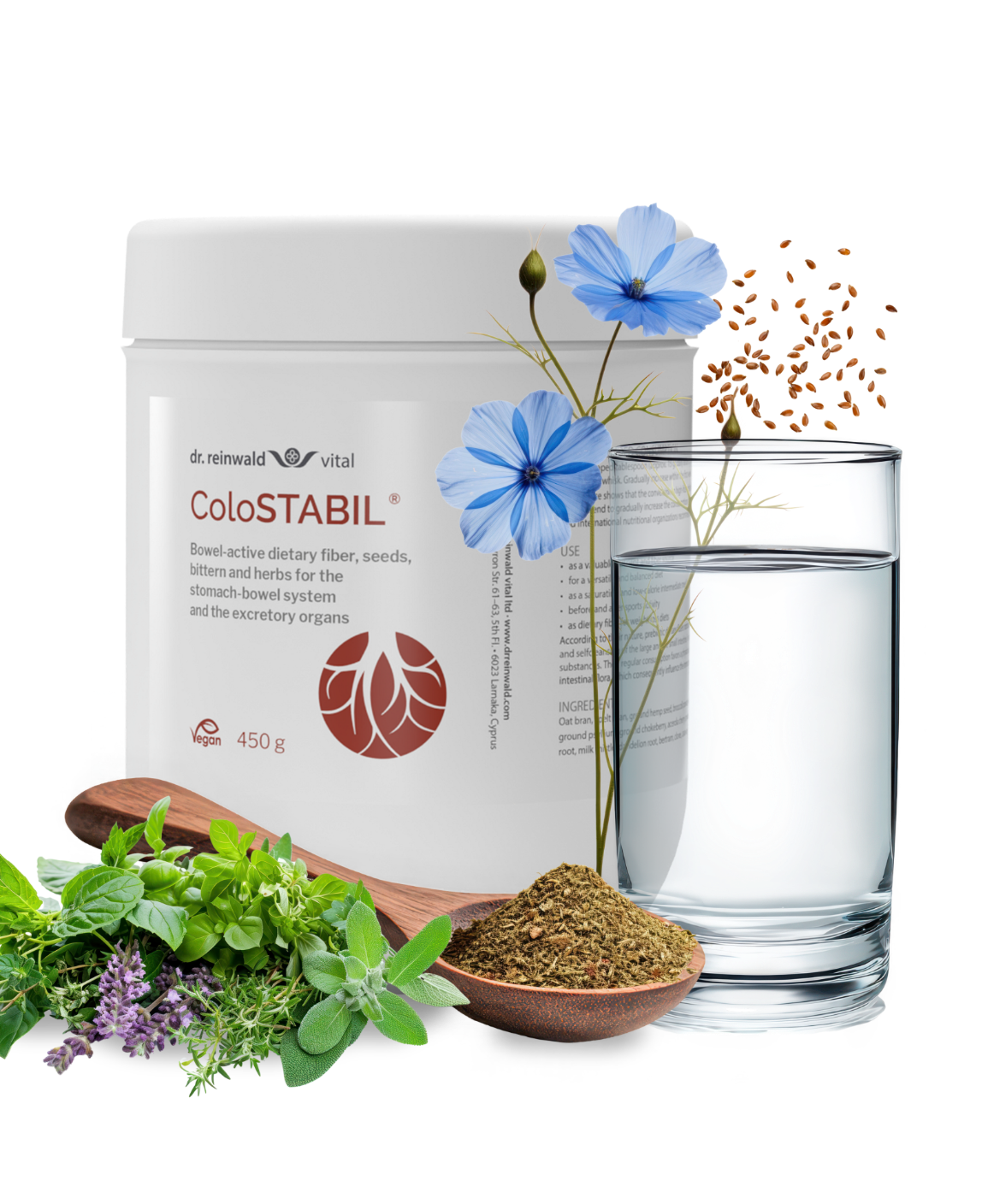
In principle, of course, we recommend a balanced and fiber-rich diet with at least 30 g of fiber daily. Plenty of fresh organic vegetables, organic fruit and purified, high-quality water are the cornerstones. Since this is not achievable for most of us – especially in view of food quality – you can also enhance your fiber supply with our high-quality herb and seed blend ColoSTABIL®. Stir one heaped tablespoon into water or juice every day, or add it to milk, yogurt and muesli, and you will not only feel well satiated, but also have a valuable source of fiber.