Antioxidants:
Our internal rust protection
The whole world is talking about sustainability, but what about our body’s own recycling of valuable vitamins and minerals? After all, these are essential in supporting our immune system and fighting harmful free radicals. In our article, you’ll learn more about the world of antioxidants and why active hydrogen is the secret star among these diligent helpers.
Free radicals: friend or foe of antioxidants?
If you search the web for antioxidants, another term automatically keeps appearing as well: so-called free radicals. It almost seems as if antioxidants and free radicals are symbiotically linked—and that impression is not misleading, because from a biochemical perspective the topic is highly interconnected. But one thing at a time! First, it is important to know what free radicals actually are.
The word already gives it away: they are extremely aggressive oxygen-containing molecules that like to attack our cells and can render them unable to function. Since free radicals also lack an electron in their chemical structure, they are unfortunately extremely unstable. Their goal? The aggressive search for a suitable electron in order to become complete again. And what target could be more tempting than intact molecules such as DNA proteins or the cell membrane! This ruthlessness not only happens at lightning speed, but also without regard for the consequences, so that the robbed and previously intact molecule itself becomes a free radical… after all, it now lacks an electron too. The result is a dangerous chain reaction that can cause immense damage in our body.
(Oxidative) stress, be gone
If this kind of electron theft—also known as oxidation—accumulates, oxidative stress inevitably develops in our body. The word already suggests it: our body comes under attack, and many health complaints can arise. In addition to gray, dull skin, weak veins, and joint problems, reduced vision or high blood pressure can also be signs of too many free radicals in the body. To prevent things from getting that far in the first place, antioxidants can provide helpful support to the body.
They are not called radical scavengers for nothing, because these intelligent little helpers can interrupt the nasty chain reactions triggered by free radicals extremely effectively! After so much concentrated biochemical knowledge, the question now arises: where can antioxidants be found, and how do free radicals develop?
Calm within, calm without. Learning to breathe again—that is it.
Christian Morgenstern
All antioxidants, or what?
These powerful antioxidants are ones you should know: astaxanthin, glutathione, allicin, sulforaphane, phenolic acids, lycopene, carotenoids, beta-carotenoids, lutein, zeaxanthin, flavonoids, anthocyanins, OPC, vitamin E and vitamin C, as well as selenium, iron, and zinc combined with enzymes
Antioxidants – important protection for our cells
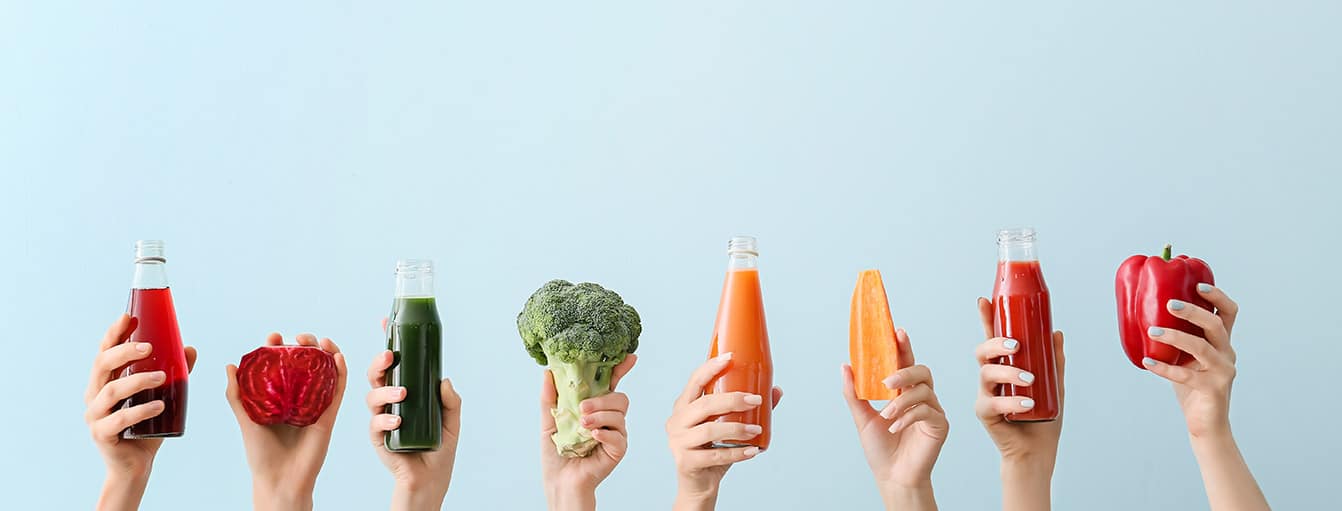
rnAntioxidants are, as you might expect, found primarily in fruit and vegetables. Vitamin C, E, B2 as well as zinc, beta-carotene, and selenium are certainly the best-known nutrient representatives when it comes to combating free radicals. And the free radicals? They are produced by highly reactive oxygen compounds, for example through too much stress, nicotine, environmental toxins, UV radiation, medications, and poor nutrition. Of course, one could argue that free radicals have not only existed recently, but have been companions of humans and animals for thousands of years. So why is the topic so immensely important for us? Well, unlike our ancestors, our modern lifestyle unfortunately contributes to increased oxidative stress. Being constantly available, high levels of exhaust pollution, a wide range of medications, little exercise, an unbalanced diet combined with too few nutrients in our foods unfortunately favor the free radicals’ ability to act unhindered.The ultimate antioxidant? Active hydrogen!
rnA balanced diet with many valuable antioxidants in the form of vitamins, minerals, enzymes, trace elements, and secondary plant compounds is certainly an effective and important ally in the fight against oxidative stress. But there is another powerful radical scavenger: active hydrogen!rnrnBasically, it is the secret “boss” among antioxidants, because unlike the other little helpers, it has a very special property: it has an excess electron for neutralizing radicals. This means it can quite calmly give its additional electron to the eager radicals, remain intact and unharmed, and, thanks to its clever molecular structure, not become a free radical itself. Sounds great, doesn’t it? Unfortunately, active hydrogen also has one small drawback: it is extremely volatile and reactive, so it is often not sufficiently available to us—even in fresh fruit, vegetables, or fresh spring water. But don’t worry… we have a solution for you here too!Active H® day & ight
Discover our colloidal microcluster mineral complex now
With negatively charged active hydrogen ions (H-), the smallest low-molecular-weight (cell-wall-permeable) antioxidants with the strongest redox potential known to science.
Against oxidative stress and to support cellular energy