Are all amino acids equally important?
Why does MyAMINO® contain only the eight essential amino acids?
A high-quality and sufficient protein supply is the foundation of our health and well-being. That is why, with our pioneering amino acid product MyAMINO®, it also forms the centerpiece of our dr.reinwald vital nutrition program. MyAMINO® offers a unique composition of the eight essential amino acids in accordance with the specific human amino acid pattern.
Yet customers repeatedly ask us why MyAMINO® contains only eight of the 21 proteinogenic, i.e. protein-building, amino acids. We would like to explain this to you below.
Amino acids, the building blocks of life
But first, let’s look at why amino acids are so important for our health. During the digestive process, our body breaks down the protein from our food into amino acids. These are absorbed directly and without loss via the small intestine and distributed through the blood to all important parts of the body, where they are converted into and incorporated as the body’s own protein (organ tissue such as skin, muscles, liver cells, enzymes, etc.) (body protein synthesis).
Amino acids therefore form the basis for…
- Hormones (insulin, glucagon)
- Neurohormones (serotonin, melatonin)
- Support and structural proteins (collagen, elastin, keratin)
- Structural proteins (actin, myosin)
- Plasma proteins (globulin)
- Transport proteins (albumin, hemoglobin)
- Sex hormones
- immune defense (antibodies, blood clotting factors)
Good to know…
If the breakdown processes of body protein synthesis are insufficient, the proteins are pushed on half-digested into the large intestine, where they are decomposed by bacteria and burden the organism – the famous “wind” and the stool with a strong putrid odor bear witness to this. Malassimilation can therefore lead to a protein deficiency despite sufficient intake through food.
An adequate supply of high-quality amino acids is therefore vital for strengthening and maintaining lean body and muscle mass, for our metabolism and our immune defenses – in short, for our health, vitality and ultimately also for our fitness and mobility into old age.
The specific amino acid profile of humans: Human Amino Acid Profile
Only more recently has it been discovered that all living beings have their own very specific amino acid profile, the so-called “master profile,” for achieving maximum protein synthesis – humans included. For body protein synthesis to function optimally, the eight essential amino acids must be available to the organism simultaneously and exactly according to the specific amino acid profile of the human organism.
If this is not the case, the so-called protein nutritional value (the ability to synthesize protein) decreases; instead, the burden of metabolic breakdown toxins (ammonia), which our body has to dispose of via the detoxification organs liver and kidneys, increases. This is exactly where our MyAMINO® comes in.
In addition, when amino acids that cannot be used for body protein synthesis are broken down, energy is also produced via gluconeogenesis in the form of glucose. Why and when should this be avoided? In people with metabolic problems, it is often advisable to limit gluconeogenesis from proteins for a certain period of time in order to get the sluggish metabolism back on track and promote good ketosis more quickly.
Learn more about amino acids in our article: Why are amino acids so important for our body?

“Two things are necessary for life to succeed:
proteins and nucleic acids.”
Arthur Kornberg on the occasion of his Nobel Prize award in 1959
MyAMINO® – the protein revolution
MyAMINO® is based on a unique amino acid formula structured according to the specific human amino acid profile (Human Amino Acid Profile). It provides an optimal ratio of the eight essential amino acids L-leucine (19.6%), L-valine (16.6%), L-isoleucine (14.8%), L-lysine (14.3%), L-phenylalanine (12.9%), L-threonine (11.1%), L-methionine (7.0%) and L-tryptophan (3.7%).
The advantage?
- MyAMINO® achieves the highest protein nutritional value worldwide with ≥ 99% NAV, which means: Almost all amino acids can be used for protein synthesis and thus for the body’s cell formation!
- Only 1% metabolic waste requiring excretion and only 1% glucose from protein metabolism are produced, so the organism and organs are hardly burdened.
- MyAMINO® is almost entirely calorie-free (only 0.4 kcal in 10 tablets) while providing your body with the same amount of actually usable amino acids as 350 g of meat, fish or poultry.
- On an empty stomach, it takes only 23 minutes for the amino acids from MyAMINO® to become available to your organism. It is already broken down and requires no splitting enzymes (peptidases). By comparison: the transition time of conventional dietary proteins into the body takes 5 to 13 times longer.
- MyAMINO® is obtained from fermented, non-GMO legumes and contains no additives, pesticides or doping substances. It is well tolerated without restrictions.
The eight essential amino acids
Of the 21 proteinogenic amino acids, eight are considered essential. It is assumed that, over the course of evolutionary history, our body lost the ability to synthesize them. Since our body cannot produce them itself, they must be obtained in sufficient quantities from food or through supplements.
What does the prefix “L-” mean?
Amino acids occur in what is known as the L and D configuration, which relates to their spatial structure. All proteinogenic amino acids in the human body are L-amino acids, which is why you will usually find the prefix “L-” in products such as our MyAMINO®.
BCAA: Leucine, Isoleucine and Valine
Leucine, isoleucine and valine are also abbreviated as BCAA (from the English: Branched Chain Amino Acids) because of their branched-chain structure. BCAAs are especially well known among strength athletes, as they play an important role in the synthesis of tissue proteins (for example in muscle building). They are an essential component of the so-called contractile proteins, which are responsible, among other things, for the contraction of our muscles and thus for our ability to move.
But that’s not all: leucine, isoleucine and valine promote the release of the growth hormone somatotropin, which is responsible for the growth of muscles, bones and cartilage. BCAAs also stimulate insulin secretion, reduce the release of the stress hormone cortisol and influence our immune function.
Unlike the other amino acids, the essential amino acids leucine, isoleucine and valine are broken down directly in the muscle and are not predominantly metabolized in the liver.
Note:
We strongly advise against taking BCAAs alone. As already described, our body can only optimally absorb and utilize amino acids when all eight essential amino acids are present at the same time and in the correct ratio to one another – provided the limited storage capacity for free amino acids has not yet been reached. Anything else inevitably leads to a reduction in protein nutritional value as well as an increased burden from metabolic breakdown toxins.

Lysine
As a building block of collagen, lysine plays an important role above all in muscle building, bone growth, wound healing and cell division. A lysine deficiency can lead to growth disorders, immune weakness and reduced enzyme activity. An adequate supply of lysine is therefore very important, especially during pregnancy and breastfeeding.
Lysine also supports the immune system and has antiviral properties. It acts as an antagonist of the non-essential amino acid arginine, the nutrient for herpes viruses. Lysine is required for the synthesis of the non-essential amino acid carnitine.
Tryptophan
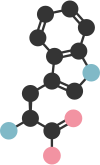
Through the formation of the two neuropeptides serotonin and melatonin, tryptophan regulates our sleep-wake rhythm, our mood, our appetite and our perception of pain. Tryptophan also plays an important role as a precursor of niacin (vitamin B3). However, the body needs 60 mg of tryptophan to synthesize 1 mg of niacin. A tryptophan deficiency is also associated with the development of chronic inflammatory bowel diseases.

Phenylalanine
Phenylalanine is used in the liver to synthesize the non-essential amino acid tyrosine. The latter is necessary, among other things, for the formation of the stress hormones adrenaline and noradrenaline, the skin pigment melanin, certain thyroid hormones and the messenger substance dopamine. In people with the congenital metabolic disorder phenylketonuria (PKU), phenylalanine cannot be metabolized into tyrosine due to a missing enzyme.

Methionine
Alongside cysteine, methionine is the only sulfur-containing proteinogenic amino acid. Sulfur acidifies the urine, which inhibits bacterial growth and counteracts infections. Methionine is therefore often used in the treatment or prevention of urinary tract infections and kidney stones. Sulfur also binds heavy metals and promotes their elimination. Furthermore, methionine serves as a supplier of methyl groups for the stress hormone adrenaline, the structural protein creatine and other important hormones.

Threonine
Threonine is an important component of many proteins, including antibodies, collagen and mucins. The latter are structure-forming components of the mucus that protects our mucous membranes. Threonine therefore plays an essential role in maintaining the health of the gastrointestinal mucosa. In addition to lysine, threonine also acts as a glue for our blood vessel walls.
In order to function optimally in the body, threonine needs sufficient amounts of vitamins B3 and B6, vitamin D and magnesium. The non-essential amino acids glycine and serine can be synthesized from threonine.
Non-essential amino acids
All other amino acids are – provided the eight essential amino acids are sufficiently available – synthesized independently by our body or obtained from other amino acids through modification. They should therefore not be additionally consumed through food or as dietary supplements, in order to avoid burdening the body with the resulting metabolic waste.
The non-essential amino acids play a role, among other things, in the production of enzymes, in the body’s own detoxification and in the regulation of our metabolism. Although they are not essential, they are therefore also a basic prerequisite for our health and well-being.

Alanine
Alanine has an important function in our body’s energy production and in muscle building, as our muscle fibers consist of about 6 percent alanine. It is also present in high concentration in prostatic fluid and influences the sensitivity of cells to insulin.
Arginine
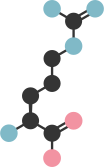
Arginine is also involved in muscle building by promoting growth hormones. It is also the basis for the body’s synthesis of the neurotransmitter nitric oxide (NO) and is therefore of crucial importance for our blood circulation, vascular health and cardiovascular system. In addition, arginine stimulates the formation of collagen and creatine (a building block of our hair fibers) as well as the formation of white blood cells.

Asparagine
Asparagine plays an important role in the body’s own detoxification and in the breakdown of alcohol in the blood, as it stimulates kidney production. It is considered blood-purifying and diuretic. Asparagine is also a starting material for chemical messenger substances (neurotransmitters).

Aspartic acid
As one of the most important messenger substances in the brain, aspartic acid influences our mental and physical performance. In addition, aspartic acid is a precursor for other neurotransmitters as well as a precursor of coenzyme A, which is involved in the breakdown of fatty acids. It also serves as an energy source for the cells of the intestinal mucosa.

Cysteine
Cysteine is of great importance in the formation of cartilage, bones, skin, hair and nails. While babies still have to obtain cysteine – at least in part – through food, later on it is produced independently by the liver from the essential amino acid methionine and the non-essential amino acid serine. Cysteine is a precursor of taurine, which is important for the nervous system, visual cells and heart function; together with vitamin B, it is involved in the formation of fat cells.

Glutamine
With a share of about 20%, glutamine is quantitatively the most important free amino acid in blood plasma. It occurs in almost every cell and acts as an important energy source, especially for the cells of the digestive system and immune defense. Glutamine is also present in high concentration in muscle cells, which also synthesize it predominantly.
Glutamic acid
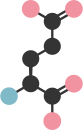
Glutamic acid is the amino acid with the highest concentration in the brain. It is the starting material for the neurotransmitter glutamate, which is involved in the urea cycle and, as a precursor of the neurotransmitter GABA, has a calming effect on the nervous system. Glutamic acid is involved in the formation of the amino acids arginine and proline as well as in the formation of glutathione. It binds the cellular toxin ammonia and therefore also plays an important role in detoxification.

Glycine
Glycine is involved in the body’s own formation of glutathione and, as a component of hemoglobin metabolism, in oxygen transport in the blood. It makes up about one third of the protein content of collagen, making it an important component of skin, hair, cartilage, tendons, ligaments and joints. To regulate blood sugar levels, the body can convert glycine into glucose. Together with taurine, glycine regulates the release of bile acid from the gallbladder into the small intestine. It is also one of the neurotransmitters, where it has a calming or inhibitory effect.
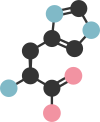
Histidine
Histidine is involved in the formation of the iron-storage protein ferritin and is a component of the red blood pigment hemoglobin. It is of particular importance for oxygen transport in the body and for buffering the pH value in our blood. Our body produces the neurotransmitter histamine from histidine, which plays a central role in the immune defense against foreign substances and is released in excess in allergies.
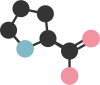
Proline
As a component of collagen, proline plays an important role in cell renewal, tissue repair and the regeneration of cartilage and bones. It protects our body from the breakdown of collagen by blocking the so-called collagenases, the enzymes that break down connective tissue. In combination with vitamin C, our body can form the related hydroxyproline from proline, which is also an important component of the structural proteins collagen and elastin. Proline itself is synthesized from glutamate, the salt of glutamic acid.

Serine
Serine is found in the two digestive enzymes trypsin and chymotrypsin as well as in many membranes. It is present in particularly high concentration in the cell membranes of the brain. It plays an important role in the transmission of stimuli between neurons and is therefore indispensable for our memory and attention. It can be synthesized from glycine or threonine.

Selenocysteine
Selenocysteine is the most recently discovered amino acid. It is a central component of many enzymes, for example deiodinase, which activates the thyroid hormone. It contains the trace element selenium and protects the body from oxidative stress. Selenocysteine is formed by modification of the essential amino acid serine.
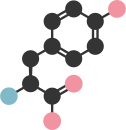
Tyrosine
Tyrosine is necessary, among other things, for the formation of the stress hormones adrenaline and noradrenaline, the skin pigment melanin, certain thyroid hormones and the messenger substance dopamine. People with the congenital metabolic disorder phenylketonuria (PKU) cannot metabolize the essential amino acid phenylalanine, the precursor of tyrosine, into tyrosine due to a missing enzyme.
Conclusion
All of the amino acids mentioned are equally important for our health and well-being. Our body can produce the non-essential amino acids independently from the eight essential amino acids – and exactly in the amount it needs. Supplying non-essential amino acids is therefore not necessary and should also be avoided in favor of protein nutritional value and to prevent an increased burden from metabolic breakdown toxins!
For the benefit and relief of your body, you should supplement only the eight essential amino acids – simultaneously and in exactly the right ratio to one another, as is the case in our MyAMINO®.
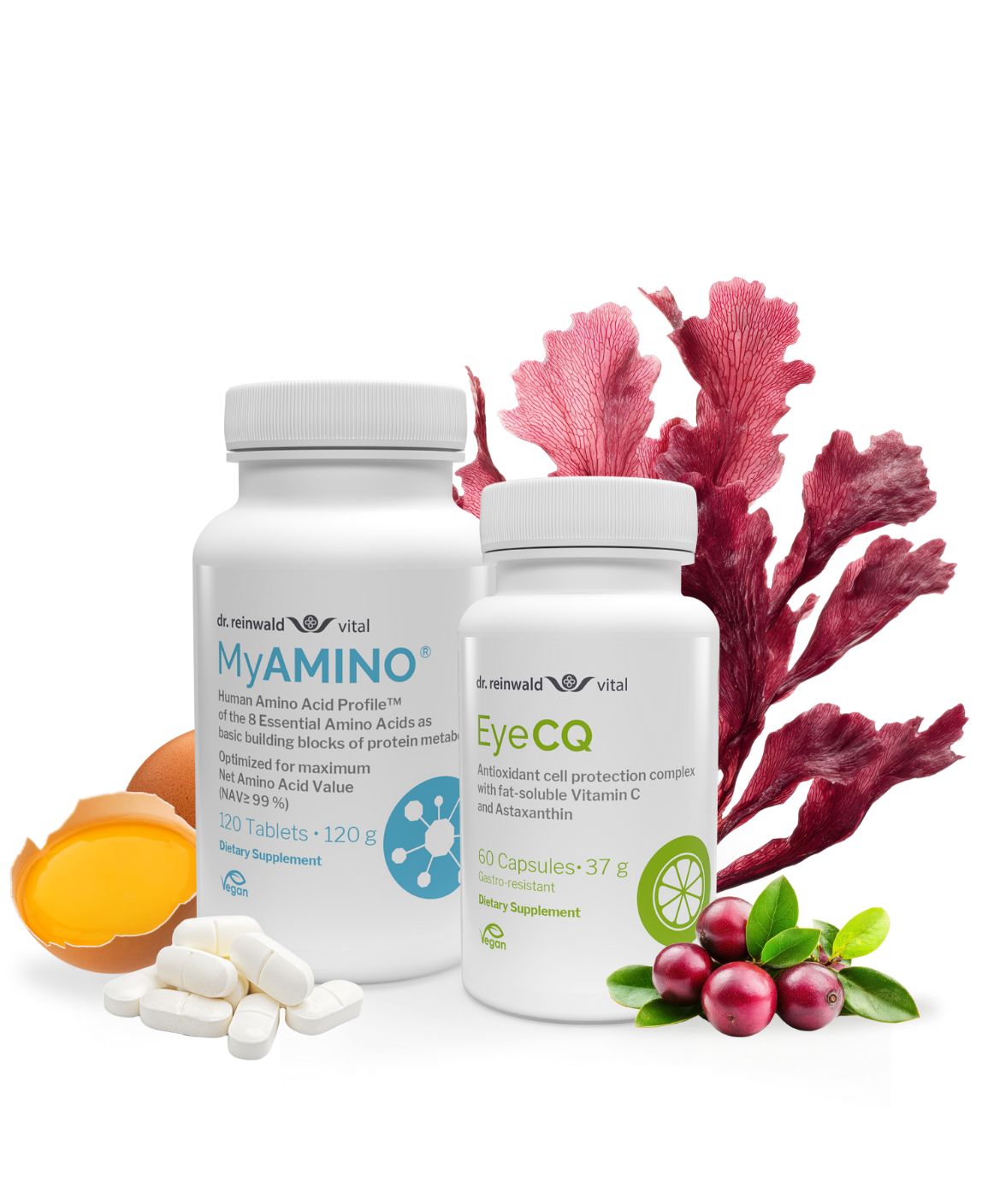
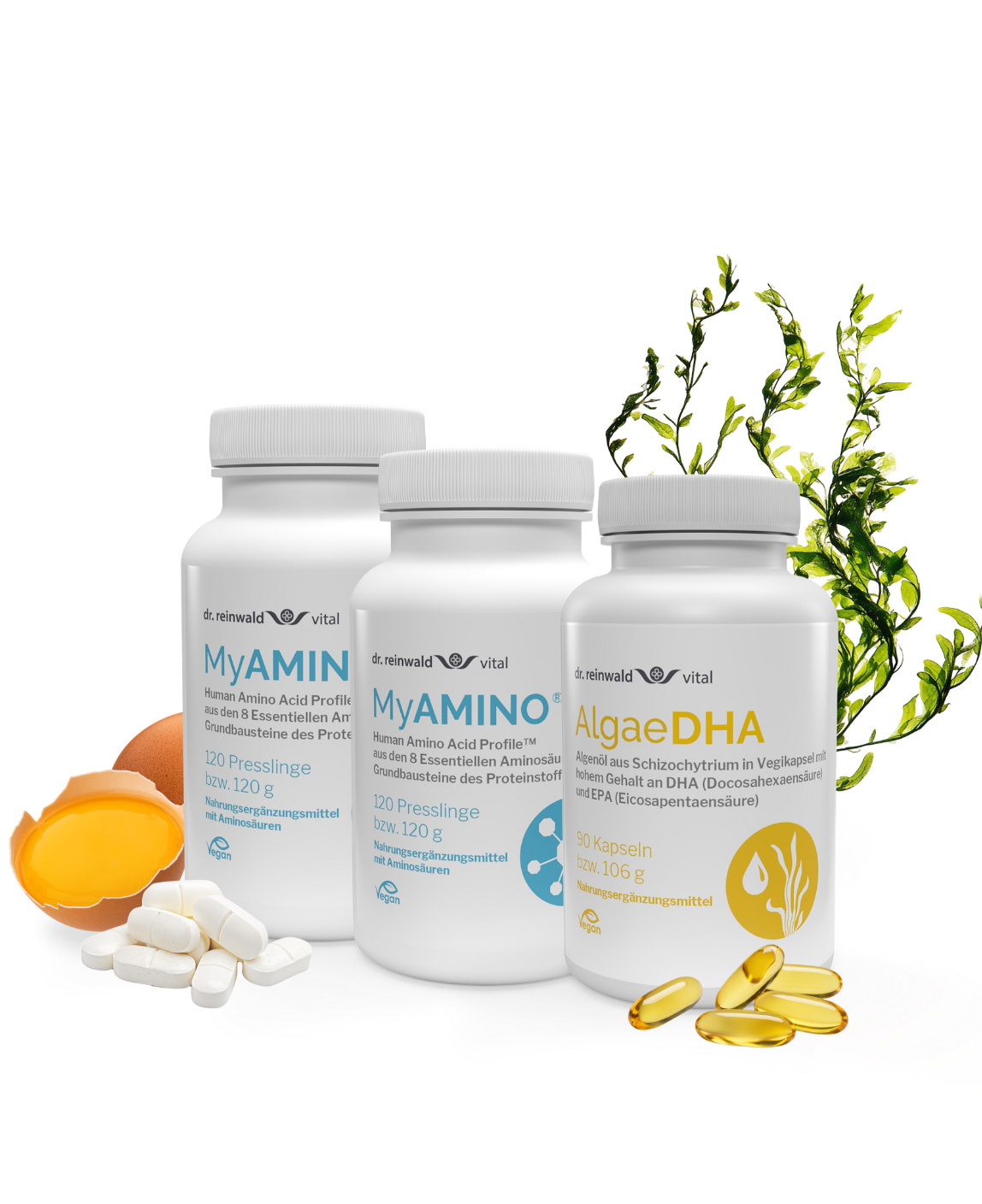
Vegan Essentials Bundle
Basics of Plant-Based Nutrition – The Musts for Vegans & Vegetarians
Vegan Essentials Bundle
Basics of Plant-Based Nutrition – The Musts for Vegans & Vegetarians