Mental Exhaustion and Brain Fog
How B12, sulfur & cofactors can specifically support you with brain fog, irritability, and inner stress
Poor concentration, inner restlessness, or persistent irritability—when your thoughts become sluggish, it is not always just due to everyday stress. Your supply of micronutrients can also be an important lever here, especially vitamin B12.
It contributes significantly to mental performance and the regeneration of the nervous system—and is consumed particularly heavily during nitrosative stress, a form of internal strain caused by nitrogen radicals.
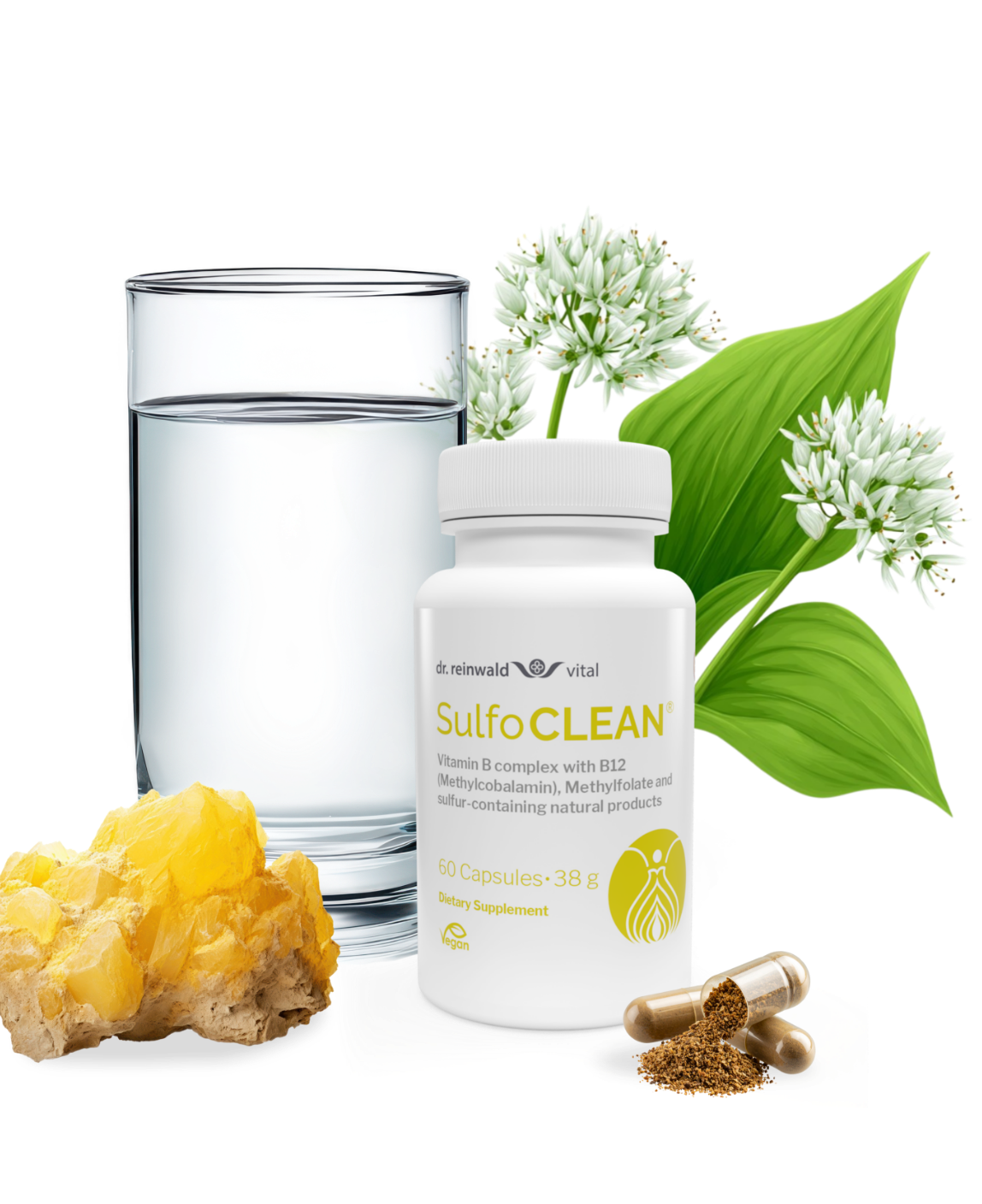
If the supply of cofactors such as folic acid or sulfur is also insufficient, the mental fog can quickly become denser. In this article, we show you how nitrosative stress can impair your mental clarity, the central role vitamin B12 plays in this, and why a combination product like SulfoCLEAN® can go beyond a classic B12 supplement.
What vitamin B12 does in the body
Vitamin B12 is one of the micronutrients that does an enormous amount in the background and yet is often underestimated.
It not only supports the formation of red blood cells, but is also important for cell division, homocysteine metabolism, and DNA synthesis. Above all, however, it plays a central role in your nervous system: it protects the sensitive nerve pathways, supports their regeneration—and helps you cope better with mental strain.
Your brain benefits too: B12 helps stimuli to be processed more clearly and helps you concentrate better. So it is no wonder that a deficiency often becomes noticeable through irritability, forgetfulness, or inner restlessness—long before the body provides measurable values.
Since vitamin B12 cannot be produced by the body itself, it must be supplied through the diet—primarily through meat, fish, eggs, and dairy products. Especially with certain dietary patterns, chronic stomach problems, or increased requirements, the supply can quickly become imbalanced.
Homocysteine and what B12 has to do with it
Homocysteine is a natural intermediate in protein metabolism. But too much of it can become problematic: a persistently elevated homocysteine level is considered a risk factor for vascular and nerve damage and is associated with a whole range of chronic diseases.
This is where vitamin B12 comes into play. Together with folic acid (vitamin B9) and vitamin B6, it ensures that homocysteine is broken down in the body and converted into harmless substances. If these micronutrients are lacking, homocysteine can accumulate in the blood—often unnoticed, but with far-reaching consequences.
An intact homocysteine metabolism is therefore an important marker of your micronutrient supply and a real early warning system for your health.
Who should pay particular attention to their B12 supply
A balanced vitamin B12 supply is not something that can be taken for granted, even with a generally healthy diet—including a ketogenic one. This is because absorption of the vitamin depends not only on its content in foods, but also on how efficiently the stomach and intestines can release and further process the substance.
The following groups of people in particular should pay attention to their B12 status—whether due to increased requirements, impaired absorption, or insufficient intake:
- People with low stomach acid, chronic gastritis, or after stomach surgery
- People who regularly take proton pump inhibitors (PPIs) or certain medications
- People with chronic intestinal problems or microbiome imbalances
- People following a vegetarian or vegan diet
- People with increased requirements, for example in the context of chronic stress, detox programs, or chronic inflammation
In these cases, targeted supplementation—ideally in combination with suitable cofactors—can help stabilize nerve function and prevent a deficiency at an early stage.

“Vitamin B12 deficiency is one of the most common nutrient deficiencies worldwide.”
Dr. Gabriel Cousens (US-American homeopath, general practitioner, psychiatrist, and family therapist)
Nitrosative stress:
When nitrogen radicals strain the nerves
While oxidative stress—triggered by reactive oxygen compounds—is now familiar to many people, another form often remains unrecognized: nitrosative stress. This involves the formation of aggressive nitrogen compounds such as peroxynitrite, which can attack cells, mitochondria, and especially the nervous system.
The body does use these radicals in small amounts in a targeted way—for example for immune defense. But if they are not neutralized in time, they can damage sensitive structures in the long term.
Possible triggers of nitrosative stress include:
- chronic inflammation or infections
- environmental factors such as heavy metals, pesticides, or electromagnetic radiation
- a nitrate-rich diet, for example from processed meat or contaminated drinking water
- chronic stress, certain medications, vaccine-related burden, one-sided dietary patterns, and cervical spine trauma
Particularly insidious: nitrosative stress leads to increased consumption of specific micronutrients—above all vitamin B12. As a so-called NO scavenger (nitric oxide binder), B12 helps neutralize excess nitrogen compounds and reduce the burden on the nervous system.
If the supply is insufficient, reactive nitrogen compounds remain active for longer—which can manifest, among other things, as irritability, cognitive exhaustion, concentration problems, or chronic fatigue.
Our practical tip!
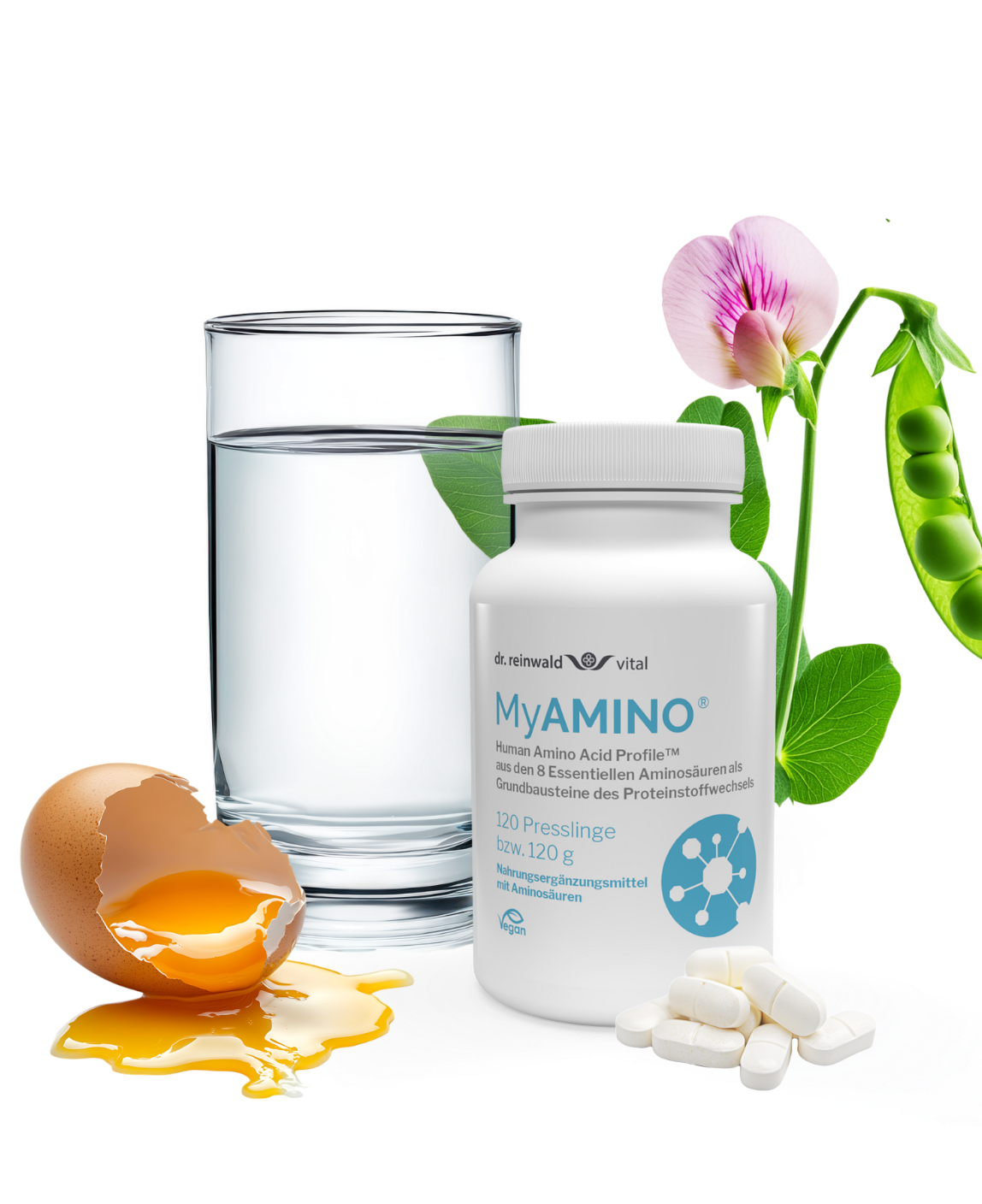
If you want to meet your protein needs in a targeted way while avoiding unnecessary nitrogen burden, the eight essential amino acids from MyAMINO could be a good option for you.
The amino acids are converted almost completely into the body’s own protein—without significant nitrogen waste products. Especially in cases of nitrosative stress, this can additionally relieve your organism and support regeneration.
You can find MyAMINO and further information on how to use it here
Why vitamin B12 alone is often not enough
Vitamin B12 is a key substance, but in order to work properly in the body, it needs strong partners at its side. This is because B12 does not perform many of its tasks in isolation, but in interaction with other micronutrients.
These include above all:
- Folic acid (vitamin B9) and vitamin B6, which together with B12 regulate homocysteine metabolism
- Sulfur compounds, which support the formation of glutathione—one of the body’s most important cell-protective substances
- Other accompanying substances such as wild garlic, which can contribute to detoxification in a natural way
Especially in cases of nitrosative stress, the need for precisely these substances is increased. If they are not sufficiently available, the inner balance can quickly get out of sync—with consequences for energy, concentration, and nerve resilience.
SulfoCLEAN®
A well-designed formula for your mental balance
SulfoCLEAN® combines high-dose vitamin B12 with a carefully balanced combination of:
- bioavailable sulfur (MSM)
- folic acid (vitamin B9)
- vitamin B6 (pyridoxine)
- and natural wild garlic powder
These micronutrients support your body in detoxification, promote glutathione formation, and help specifically regulate mental exhaustion and cellular stress.
Whether during intense phases, under chronic strain, or for long-term support—SulfoCLEAN® provides the building blocks your body needs now.
When the stomach does not cooperate: absorption problems with B12
However, supplied vitamin B12 does not always end up where it is needed. For good absorption, the body must meet several requirements, especially in the stomach and small intestine.
Among other things, the following are needed:
- sufficient stomach acid to release B12 from food
- an intact intrinsic factor, a special transport protein from the parietal cells of the stomach
- and a healthy mucous membrane in the terminal ileum, the last section of the small intestine
If one of these factors is disrupted—for example due to chronic inflammation of the stomach lining, acid blockers (PPIs), or autoimmune reactions—vitamin B12 cannot be utilized despite sufficient intake.
Typical signs of impaired absorption include:
- peripheral nerve symptoms, such as tingling, numbness, or muscle twitching
- persistent exhaustion despite taking B12
- or abnormal blood values (e.g. increased MCV with normal hemoglobin)
In such cases, alternative dosage forms such as methylcobalamin drops or—in consultation with medical professionals—B12 injections may be useful.
👉 If you are unsure whether your absorption is working optimally, it is worth discussing your individual situation with our team.

“Every disease, every ailment, and every disorder can be traced back to a mineral deficiency.”
Linus Pauling (US-American chemist and Nobel Prize winner in Chemistry)
Conclusion: Clear-headed—strong in everyday life
When your thoughts become sluggish, your nerves are quickly on edge, and everyday life becomes a constant burden, it is worth taking a closer look at your micronutrient supply—especially vitamin B12.
Especially in cases of nitrosative stress, which can arise from environmental factors, chronic inflammation, or mental overload, B12 is consumed in greater amounts. A deficiency of vitamin B12 and missing cofactors such as folic acid or sulfur compounds can significantly disrupt neurobiological balance—with effects on concentration, mood, and cognitive performance.
Through a targeted combination of high-dose vitamin B12, sulfur compounds, and cofactors such as folic acid and vitamin B6, you can support your body in bringing concentration, energy, and nerve resilience back into balance.
Five impulses for more mental ease in everyday life
Pay attention to a B12-rich diet
Meat, fish, eggs, and dairy products provide vitamin B12. With a plant-focused diet or absorption disorders, supplementation is therefore advisable.
Take good care of your stomach
Avoid long-term use of stomach acid blockers. Bitter substances before meals, such as artichoke or dandelion, can gently stimulate stomach acid production. Our CHI extracts and our bitter herb aperitif HerbiGOLD can effectively support you in this.
Have your homocysteine level checked
It provides insight into your supply of B vitamins and can indicate deficiencies early on—long before symptoms appear.
Move regularly—even in the fresh air
Exercise not only helps reduce stress, but also gets cellular metabolism going, especially in combination with light and oxygen.
Rely on synergies
A targeted micronutrient combination like in our product SulfoCLEAN® or our eight essential amino acids in MyAMINO® can help you regulate cellular stress and relieve the nervous system—especially during demanding times.
If you are not sure whether your current supply matches your needs, feel free to contact us via chat, email, or phone. Sometimes it only takes small impulses to bring clarity back to the mind.