The Pineal Gland – the shimmering pacemaker of the internal clock
Even the ancient Greeks knew about the significance and anatomical location of the pineal gland. While the Greek physician and philosopher Galen believed the pinecone-shaped gland was responsible for blood flow, many of his colleagues believed that it was “the first instrument of the soul.”
Even almost 2,000 years later, the fascination with this small gland in the brain has not diminished. It has long been scientifically proven that it is responsible for the production of the sleep hormone melatonin and is therefore an important pacemaker for our physical, mental, and spiritual health.
What and where is the pineal gland?
The pineal gland – also called the glandula pinealis or epiphysis – is a so-called endocrine hormone gland in our diencephalon. Measuring only five to eight millimeters, about the size of a tiny grain of rice, it sits extremely centrally in the middle of the skull and is located at roughly the same height as the eyes. No wonder it is also referred to as the Third Eye and has been associated with a higher human consciousness for many millennia. This inner eye is said above all to enable “seeing” on an emotional level.
But its shape is also unusual: it strongly resembles the cone of a Swiss stone pine and owes its distinctive name to this fruit.
What does the pineal gland do – what tasks does it perform?
Although it is located in the brain, the pineal gland is an important part of the endocrine – i.e., hormonal – system, which in turn controls important bodily processes such as our metabolism, growth, and sexual development. By converting nerve signals into hormone signals, it is, on the one hand, an important connecting point and, on the other, thanks to its central location and good blood supply, serves as a pacemaker for all other glands. In addition, however, this small powerhouse organ has another extremely important function. It is responsible for the production of the sleep hormone melatonin. The state of our sleep-wake rhythm and how well we sleep therefore depend largely on the condition of the pineal gland.

“The shorter you sleep, the shorter your life.”
Matthew Walker, PhD
Sleep researcher at the University of Berkeley
Pineal gland and melatonin production – how does it work?
Put simply, our pineal gland converts the hormone serotonin, which it produces during the day, into the sleep hormone melatonin at night. Both are neurotransmitters (the body’s own messenger substances) that act as connecting points in all nerve cells of the body. While serotonin is also known as the happiness hormone and is associated with relaxation and a mood-enhancing effect, melatonin regulates our sleep behavior, the quality of our night’s rest, and, of course, falling asleep.
It is therefore hardly surprising that our melatonin level reaches its peak mainly at night. Between two and three o’clock, the blood concentration is at its highest and steadily decreases when light falls on the retina – even with closed eyes. Sleeping in dark rooms is therefore highly advisable for a restful night, as this primarily controls the depth and quality of our sleep.
If this sleep-wake rhythm is disrupted and there is a melatonin deficiency, this usually manifests as sleep problems as well as exhaustion and fatigue. The result: our biorhythm becomes imbalanced, and we also suffer from listlessness, lack of drive, difficulty concentrating, and low performance. After all, restful, high-quality sleep has an exceptionally strong antioxidant potential. Especially during the nightly rest phases, cell damage can regenerate and our body can recharge the energy it needs for the day.
It is therefore not particularly surprising that sleep disorders represent a higher risk for autoimmune diseases and depression, as confirmed by a Taiwanese long-term study with nearly 85,000 participants in 2003.*
Fountain of youth: the pineal gland?
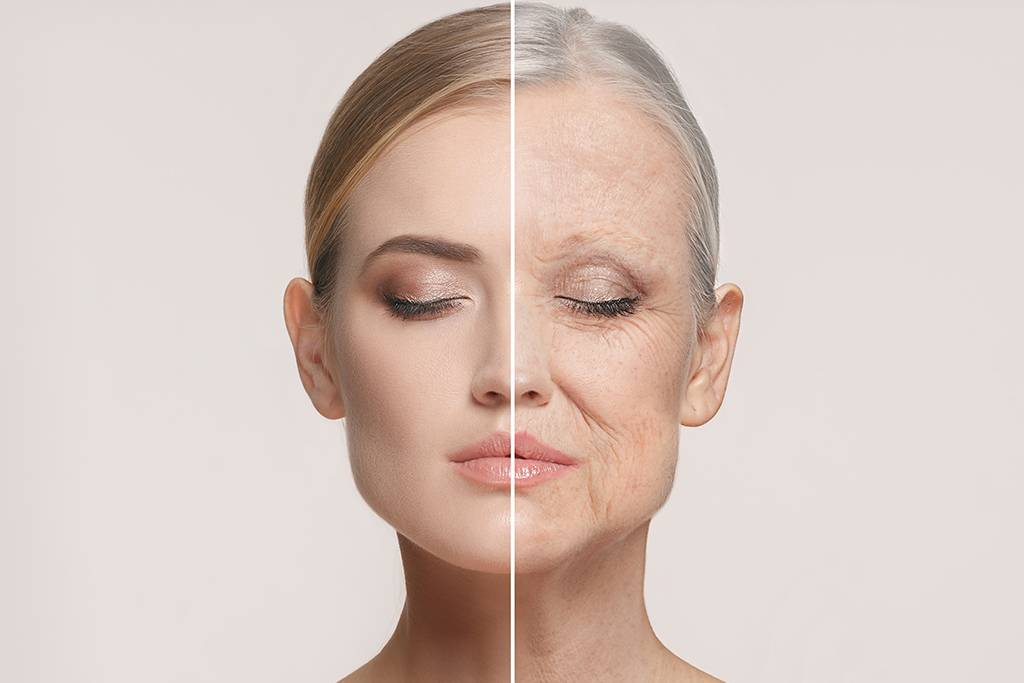
Another fascinating fact is that anti-aging researchers in particular see a clear connection between declining pineal gland activity and the resulting reduced melatonin production in the aging process. This is understandable, because, as already mentioned, cell damage is repaired primarily at night and harmful free radicals are combated with antioxidants such as melatonin. Targeted melatonin intake as a highly effective anti-aging agent can be a thoroughly sensible approach when seeking to delay aging. Of course, this should always be practiced in combination with a healthy lifestyle. A balanced diet, plenty of exercise, good water, and, of course, a positive basic attitude are just as important in defying the natural aging process.

The third eye: spirituality and the pineal gland
If you look at the seven energy centers (chakras) of our body, the shape and also the position of the so-called brow chakra immediately stand out: in the middle of the head and at eyebrow level sits the pinecone-shaped energy point. In other words, exactly at the position of our pineal gland, which is therefore also referred to as the “eye to our soul” or the “Third Eye.” It thus represents the gateway to higher and subtle levels of consciousness, which, however, need to be specifically activated through special meditations, high frequencies, and a certain inner attitude. The fact that our pineal gland has shrunk significantly over the course of evolution (from an original three centimeters to a tiny five to eight millimeters) and is now often heavily calcified due to environmental toxins, fluoride, and our “modern” lifestyle is also said to reduce its possible spiritual potential.

The pineal gland? The seat of the soul.
View of René Descartes (1596 – 1650)
French philosopher, scientist, and mathematician
Our 8 tips for a more active pineal gland
To ensure that your pineal gland remains active in the future and can produce valuable melatonin, we have compiled some helpful tips for you below.
- Avoid fluoride, because these salts of hydrofluoric acid are the pineal gland’s greatest enemy. This substance is often found in common toothpastes, mouthwashes, and also in many mineral waters. Therefore, switch to fluoride-free toothpastes and ideally to filtered, pure water.
- Aluminum, mercury, caffeine, tobacco, refined sugar, highly industrially processed foods, soft drinks, and radiation fields are also known to promote calcification of the pineal gland. Therefore, try to avoid these substances.
- Effectively support your body’s own detoxification, for example with PektiCLEAN®, ChitosaCLEAN colon, PlastiCLEAN®, or SulfoCLEAN®. Once burdensome substances such as heavy metals have been bound and eliminated, your sensitive pineal gland – along with your entire organism – will be pleased.
- Breathe consciously, deeply, and with focus – preferably as part of a daily meditation. Consciously focus on the area between your eyes, i.e., your third eye, and sense within yourself. Relaxation and serenity are valuable for the production of serotonin and melatonin.
- Enjoy the sun’s rays, every day for at least 15 minutes and without sunglasses! Light energy fuels your pineal gland and stimulates serotonin production.
- Pay attention to a good sleeping environment, such as a darkened room, and avoid using technical devices such as smartphones, tablets, computers, and TV sets. Unfortunately, the backlighting greatly disrupts the production of melatonin.
- Hum and sing to your heart’s content, because the vibrations generated in this way greatly stimulate your pineal gland.
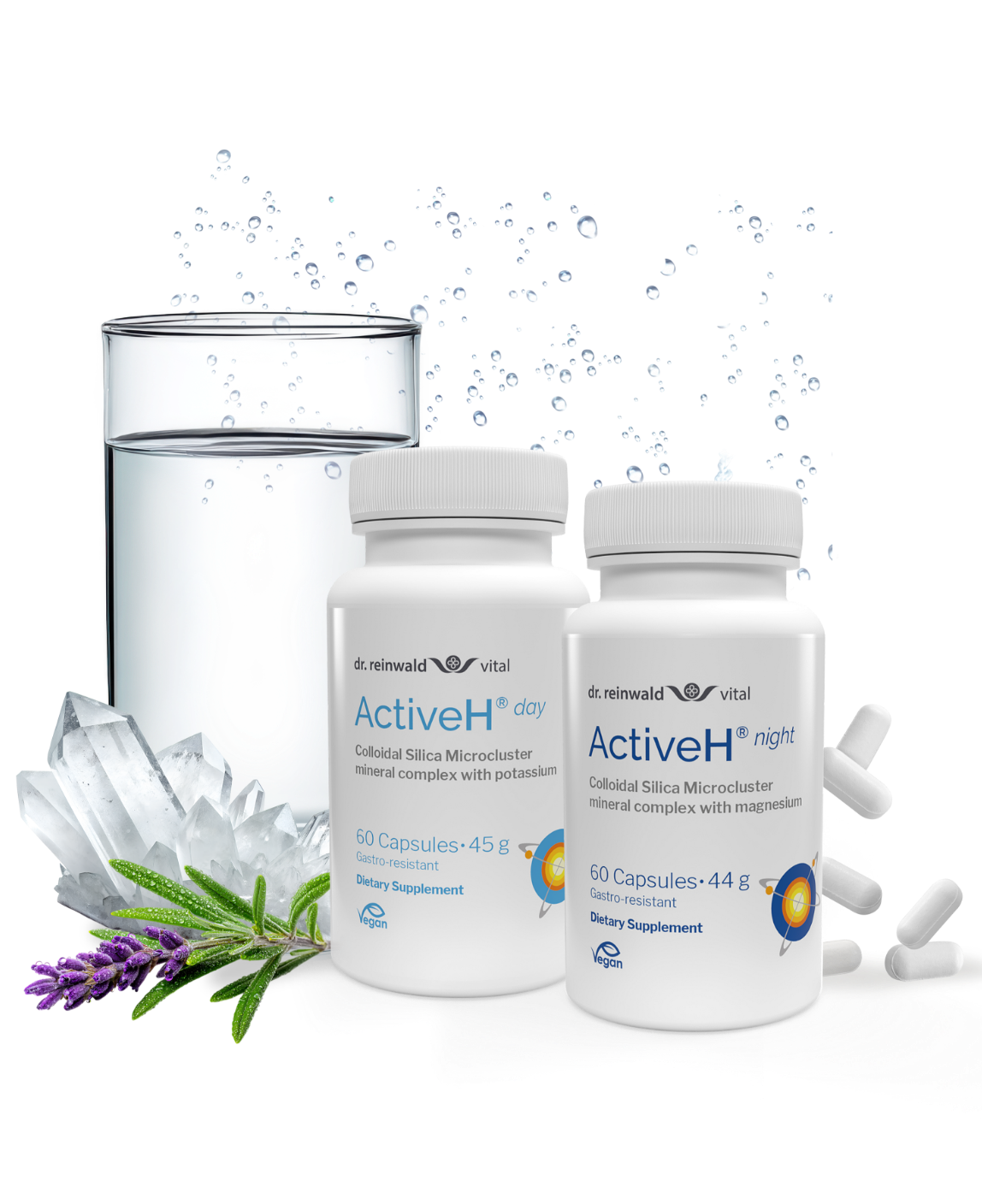
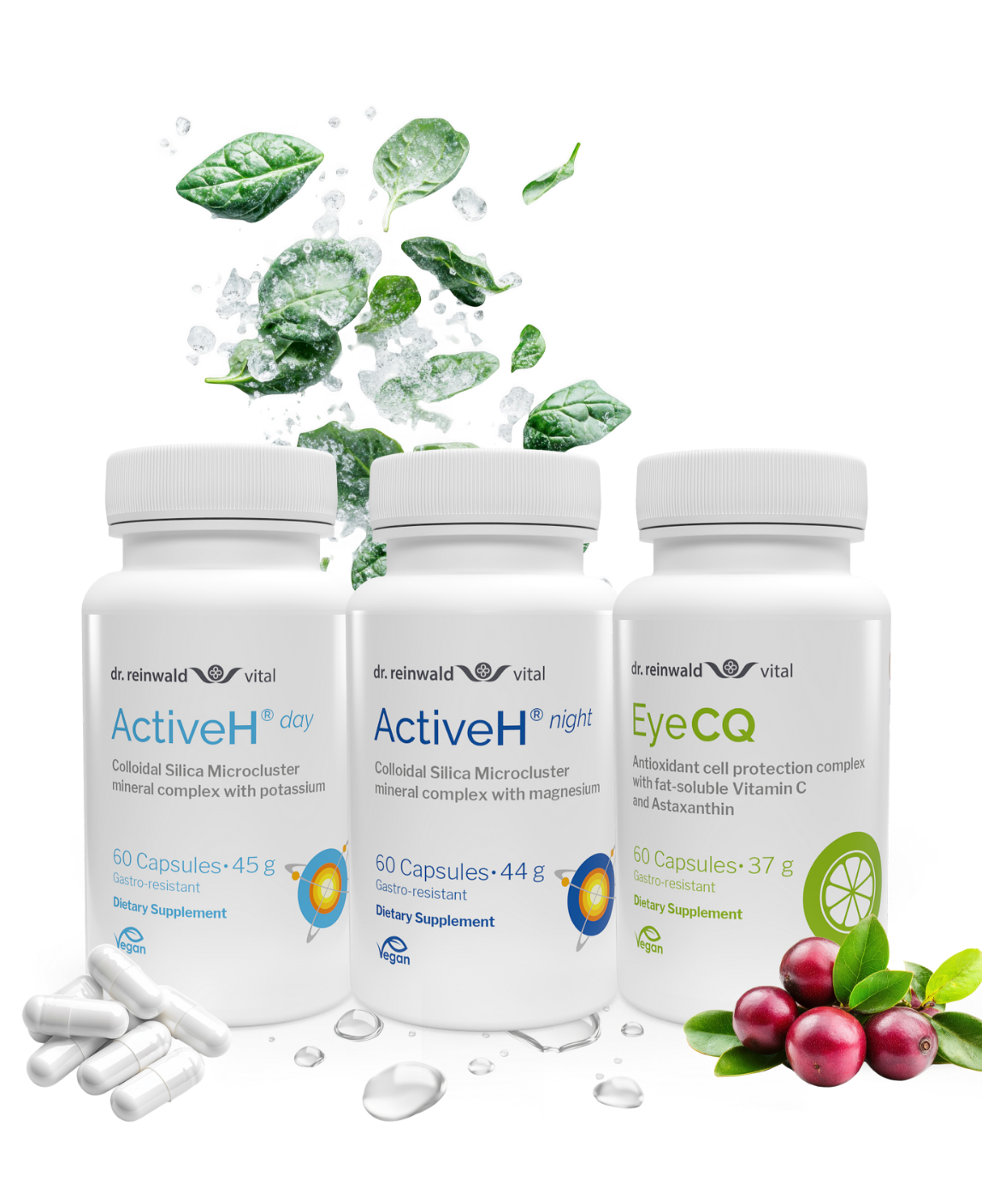
- Specifically supply nutrients such as magnesium, but above all also boron (borax). In Active H® night you will find both ingredients and, with the additionally contained selenium, receive a trace element that is also important in eliminating cell-damaging free radicals. Your pineal gland loves these nutrients and rewards you with the production of melatonin.
* Hsiao YH, Chen YT, Tseng CM, Wu LA, Lin WC, Su VY, Perng DW, Chang SC, Chen YM, Chen TJ, Lee YC, Chou KT. Sleep disorders and increased risk of autoimmune diseases in individuals without sleep apnea. Sleep. 2015 Apr 1;38(4):581-6. doi: 10.5665/sleep.4574. PubMed PMID: 25669189; PubMed Central PMCID: PMC4355897. (https://www.ncbi.nlm.nih.gov/pubmed/25669189