Too much or too little stomach acid?
Trust your gut again—with a smart approach
Who hasn’t experienced it? Your belly rumbles, your stomach hurts, and your intestines send unmistakable signals! Complaints that each of us experiences from time to time—unfortunately, for many of us, gastrointestinal problems have become an everyday occurrence. The symptoms are varied, and the number of people affected is alarming. Around 20 million Germans suffer from chronic complaints and also feel severely restricted in their quality of life. Reason enough for us to take a closer look at the causes and introduce you to natural treatment approaches and tips.
Stomach acid – an important digestive aid for our stomach
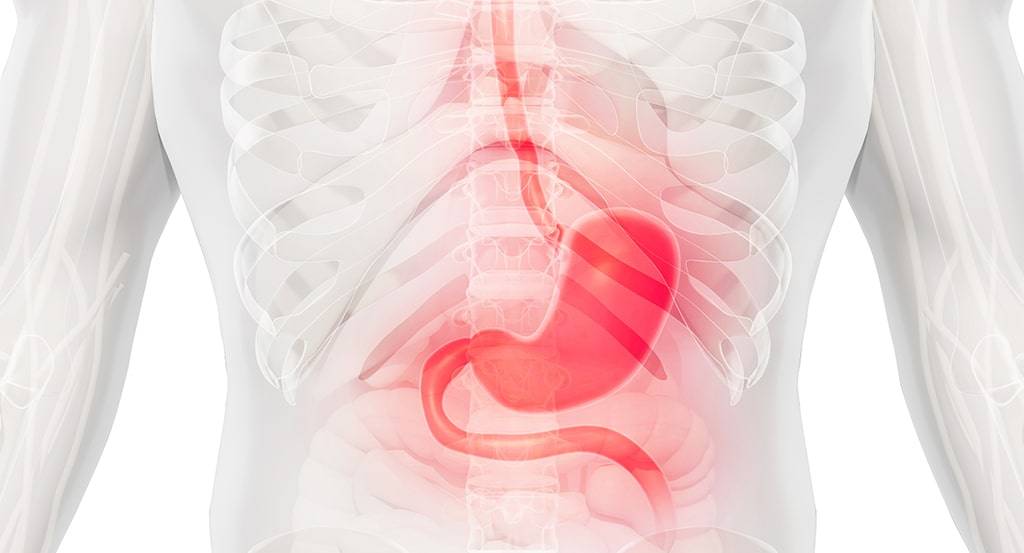
What exactly is stomach acid? Various cells in the gastric mucosa produce two to three liters of digestive fluid every day, known as gastric juice. This consists of different components: among other things, water, mucus substances, digestive enzymes, the so-called intrinsic factor (which is important for the absorption of vitamin B12), bicarbonate, and also hydrochloric acid—in other words, stomach acid.
Our food enters the stomach chopped up and mixed with saliva—well or only slightly pre-chewed, depending on our chewing habits. But this is nowhere near enough preparation for the food components to be optimally broken down and utilized in the further digestive process. And that’s where aggressive stomach acid comes into play: it becomes active as soon as ingested food enters the stomach, but also as soon as we smell a meal or even just think about it.
In response to these stimuli, our parietal cells—special glandular cells of the gastric mucosa—produce hydrochloric acid and bicarbonate. To prevent the aggressive stomach acid from attacking the stomach itself, there is another important protective mechanism: the gastric mucosa. The bicarbonate is also stored in the mucosa; it neutralizes the hydrochloric acid and thus also protects the gastric mucosa.
Stomach acid breaks food down into its individual components and prepares it optimally for further digestion. In the process, important substances are released from food, for example iron, calcium, and vitamins such as vitamin B12.
At the same time, stomach acid activates the digestive enzymes contained in gastric juice, which then further process the chyme. But stomach acid has another task as well: it kills microorganisms and bacteria contained in food. Most pathogens cannot survive such an acidic environment.
You can already see: our digestion is a perfectly coordinated system. Like a large machine—if one cog in the gears gets stuck, the whole mechanism falters. Or put another way: if our food leaves the stomach poorly pre-digested, this puts a strain on all the other digestive organs, from the intestines to the pancreas and the liver. In some cases, with considerable consequences for our health.
When your stomach is acidic: causes and symptoms of excess acidity
The production of too much stomach acid can have various causes: constant stress and hectic pace, an unhealthy diet, little exercise, nutrient-poor and pesticide-contaminated foods, consumption of alcohol and nicotine, taking medication, but also inflammation of the gastric mucosa caused by the bacterium Helicobacter pylori. Put the other way around, with our modern lifestyle it is almost a challenge not to become overly acidic.
If the blood is at risk of becoming too acidic, a kind of emergency management takes place: the parietal cells are called upon to produce alkaline bicarbonate in order to bring the body back into an acid-base balance. Since the parietal cells can only ever produce bicarbonate and hydrochloric acid—that is, stomach acid—at the same time, a true vicious cycle begins. Our body permanently produces too much stomach acid.
Short-term excess acidity in the stomach is usually not a major problem. However, with a permanent excess of stomach acid, the protective function of the gastric mucosa eventually declines, leading to what is known as hyperacidity—the stomach becomes overly acidic.
We then notice this through various complaints:
- Heartburn (when stomach acid does not stay in the stomach but enters the esophagus)
- Acid reflux
- Feeling of fullness, loss of appetite
- Nausea, vomiting
- Bad breath
- Stomach pain or stomach discomfort
- Damage to the gastric mucosa such as inflammation or ulcers
- Duodenal ulcer
But at some point, this mechanism also tips over. Due to the constant strain, the parietal cells become exhausted and block, meaning they refuse to produce. The result: too little stomach acid is formed in the stomach. And this too can have devastating effects on our health.
The underestimated problem:
from excess acidity to stomach acid deficiency
Did you know that 80 percent of all Europeans have too little stomach acid? A deficiency of stomach acid can therefore be the consequence of excess acidity, but it can also be caused by other factors: long-term use of so-called proton pump inhibitors, i.e. stomach-acid-inhibiting medications; chronic type A gastritis, in which the immune system attacks the parietal cells; or simply increasing age, as stomach acid production decreases over time.
Due to a lack of stomach acid, food can no longer be properly broken down in the stomach. This primarily affects protein molecules, which are then no longer sufficiently broken down. In the intestine, the impaired protein digestion leads to a fermentation process in which nitrogen and toxic ammonia are formed. This cellular toxin not only damages the sensitive intestinal environment, causing the “good” intestinal bacteria to die off due to the alkaline milieu; it can also pass through the intestinal wall into the bloodstream, travel to the liver, and ultimately even reach the brain.
A lack of stomach acid often also leads to severe deficiency symptoms, for example a vitamin B12 deficiency, which in turn can result in iron deficiency and anemia.
You can see that none of this sounds good—and certainly not healthy. But how does a stomach acid deficiency make itself known? Unfortunately, a lack of stomach acid and the associated nutrient deficiency often lead to diffuse, rather general complaints that we do not even associate with an imbalance in the stomach:
- Bad breath
- Foul-smelling stools or gas
- Disrupted intestinal flora
- Non-specific digestive complaints such as bloating or diarrhea
- Fatigue through to severe exhaustion
- Susceptibility to infections
What can you do about it?
First and foremost, you should change your lifestyle as quickly as possible. Even if it’s difficult for you, remember: your body and your health should be worth it to you.
- Pay attention to a balanced and healthy diet with plenty of fresh foods.
- An alkaline-rich diet consists of 70 to 80 percent alkaline foods and 20 to 30 percent acid-forming foods. Here you will find a nutritional table.
- Lactic acid bacteria are the true heroes when fermentation processes are already underway in your intestines: they can convert ammonia into less toxic ammonium, which can then be broken down relatively well via the liver’s urea cycle.
- Drink enough fluids—preferably good, purified water or unsweetened tea.
- Take enough time to eat and try to eat as consciously and slowly as possible, and above all chew well.
- Avoid stimulants such as nicotine, alcohol, or sweets.
- Reduce stress in your life: take time-outs and short breathing breaks during the day. Improve your stress management. A relaxation technique such as yoga or Qi Gong can help you calm down better and find your center.
- Exercise regularly, preferably in the fresh air.
- Consume two MyAMINO® about 20 minutes before a meal. These stimulate gastric juice production and prepare digestion.
- Be sure to avoid taking acid blockers or proton pump inhibitors. They may relieve your symptoms in the short term and superficially. However, they do not treat the cause and disrupt the acid-base balance in your stomach even further, with potentially far-reaching consequences.
Daily vital companions from dr.reinwald for your stomach
If you have had stomach problems for some time, it makes sense to give your body additional support so that it can regain its balance. You will no longer be able to compensate for nutrient deficiencies through your diet alone. Our dr.reinwald vital products are very well tolerated and help you restore the balance in your stomach and replenish your nutrient stores in an effective and gentle way.
- The prebiotic fibers in ColoSTABIL® gently and sustainably bring your intestinal flora back into balance. Especially in cases of stomach acid deficiency, the bitter substances contained in ColoSTABIL® can work true wonders. They stimulate gastric juice production and thereby compensate for the lack of stomach acid.
- Our VitalBASE® with gastric-juice-neutral alkaline minerals on an intestinal-cleansing fiber carrier is the perfect balance for an acid-heavy diet. The prebiotic fibers apple pectin and inulin additionally soothe and strengthen your intestinal flora.
- HerbiGOLD is our herbal bitters with very special properties, as it also contains thujones, among other things. These are absent from most bitter substances found in nature.
- Our vitamin B complex SulfoCLEAN® supports you with a unique combination of biologically active B vitamins (B12, B6, and folate) as well as organic sulfur (MSM and wild garlic). This not only covers your vitamin B12 needs, but also supports your detoxification metabolism at the same time.
Do you feel this applies to you? Our friendly team—consisting of therapists and naturopaths—will be happy to advise you on our products for your stomach. Call now or use our chat.