BrainFood – Your Key to a High-Performing Brain and Sharp Senses
Our brain is a highly complex structure: it contains around 86 billion nerve cells, known as neurons, which continuously communicate with one another, adapt, keep learning, and are repeatedly regenerated. Several hundred trillion synapses are responsible for signal transmission. A true marvel of nature, then—one that no supercomputer can match to this day! The brain and nervous system remain capable of learning and adapting well into old age. Provided the conditions are right. Because both not only need to be trained regularly, but also supplied with sufficient nutrients and energy. In this article, we introduce you to five important helpers for an alert brain and sharp senses.
 What Does Brainfood Mean?
Brainfood is currently experiencing a real hype. But what exactly does it mean?
The term refers to foods and nutrients that have a particularly beneficial effect on our nervous system and our brain.
Brainfood not only supports our concentration and the performance of our brain, it also sharpens the senses, has a positive effect on our mood, and sustainably protects our cells from oxidative stress.

»The brain is the only part of the body
that does not age if you keep it fit.«
Jean Pütz (science journalist and television presenter)

1. Nothing Works Without Fluids: Drink Enough
Our brain consists of 80 percent water. That is why it is extremely important that the water balance in our brain is constantly regulated. If we take in too little fluid, the blood becomes thick, oxygen and nutrient transport slows down, the cells are no longer properly supplied, and communication between neurons no longer functions smoothly. The result: thinking becomes difficult, and we can no longer concentrate properly. Adequate fluid intake is also very important for our sensory organs, especially the eyes, as otherwise problems such as dry, reddened eyes and, in the worst case, diseases such as cataracts or glaucoma can occur.
To avoid this and keep your brain and senses fit and healthy, you should drink at least two liters a day—preferably good, pure spring water or unsweetened herbal teas.
2. The Building Blocks of All Life: Amino Acids
A good protein supply is essential for our mental performance. This is because the amino acids it contains are essential building blocks for our cellular metabolism and therefore crucial for the development and regeneration of nerve cells. But that is not all. As precursors of the neurotransmitters adrenaline, noradrenaline, dopamine, and serotonin, essential amino acids such as methionine, tryptophan, histidine, and BCAAs (leucine, isoleucine, and valine) in particular play an important role in the smooth flow of information in our brain.
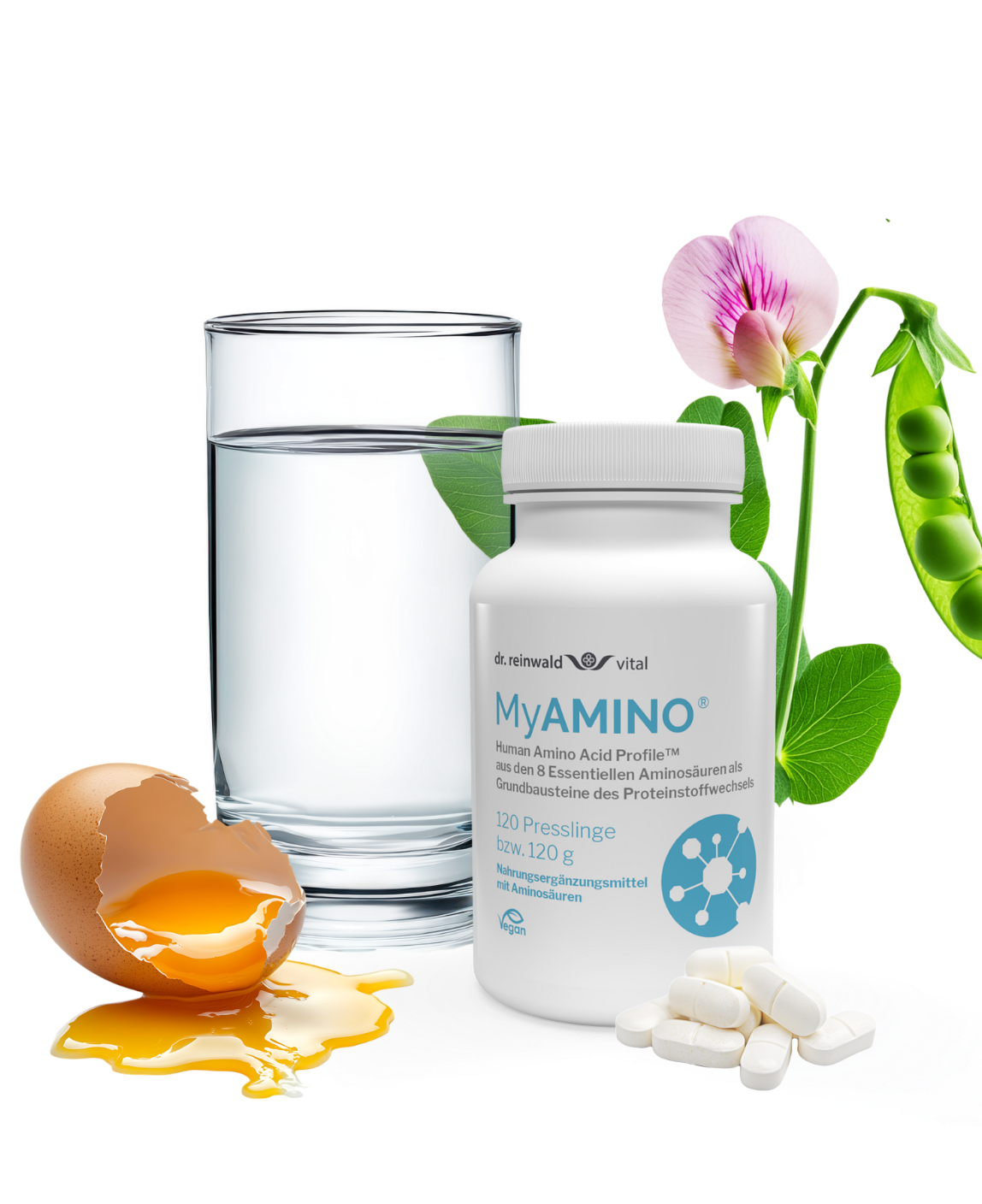
Since our body has no protein storage, our brain cells, as well as the cells in our sensory organs, depend on a regular supply of protein. But one thing must be kept in mind: not all protein is the same! For optimal usability, it is not only the quantity that matters, but especially the quality of the proteins. That is why, in addition to a healthy diet, we recommend regularly supplying the eight essential amino acids. Learn more about amino acids.
With our MyAMINO®, we offer you a globally unique protein product that allows you to supply your body with a high proportion of highly pure amino acids and produces almost no nitrogen waste (< 1%).
3. The Natural Free Radical Scavengers: Antioxidants
Our ability to think and our mental agility begin to decline slowly as early as our late twenties. How quickly we—or our cells—age depends on various factors. An important role is played by what is known as oxidative stress, which is partly responsible for cellular aging in the brain and sensory organs and can lead to concentration and memory problems as well as other health issues. It is also associated with degenerative brain diseases such as Alzheimer’s dementia and eye diseases such as age-related macular degeneration (AMD).
Oxidative stress occurs when there are too many free radicals and too few antioxidants in the body. An unhealthy diet, stress, cigarette smoke, and alcohol consumption, as well as external influences such as UV radiation, pollutants, and other negative environmental factors, promote the formation of free radicals. Our brain and sensory organs in particular suffer from this, as they react very sensitively to them. To protect our cells, it is important that we supply our body with sufficient antioxidants, which are also considered natural free radical scavengers.
The following antioxidants are particularly important for the health and functionality of our brain and sensory organs: vitamins C and E, astaxanthin, coenzyme Q12, glutathione, carotenoids, beta-carotenoids, selenium, iron, and zinc combined with enzymes as well as active hydrogen. Learn more about antioxidants.
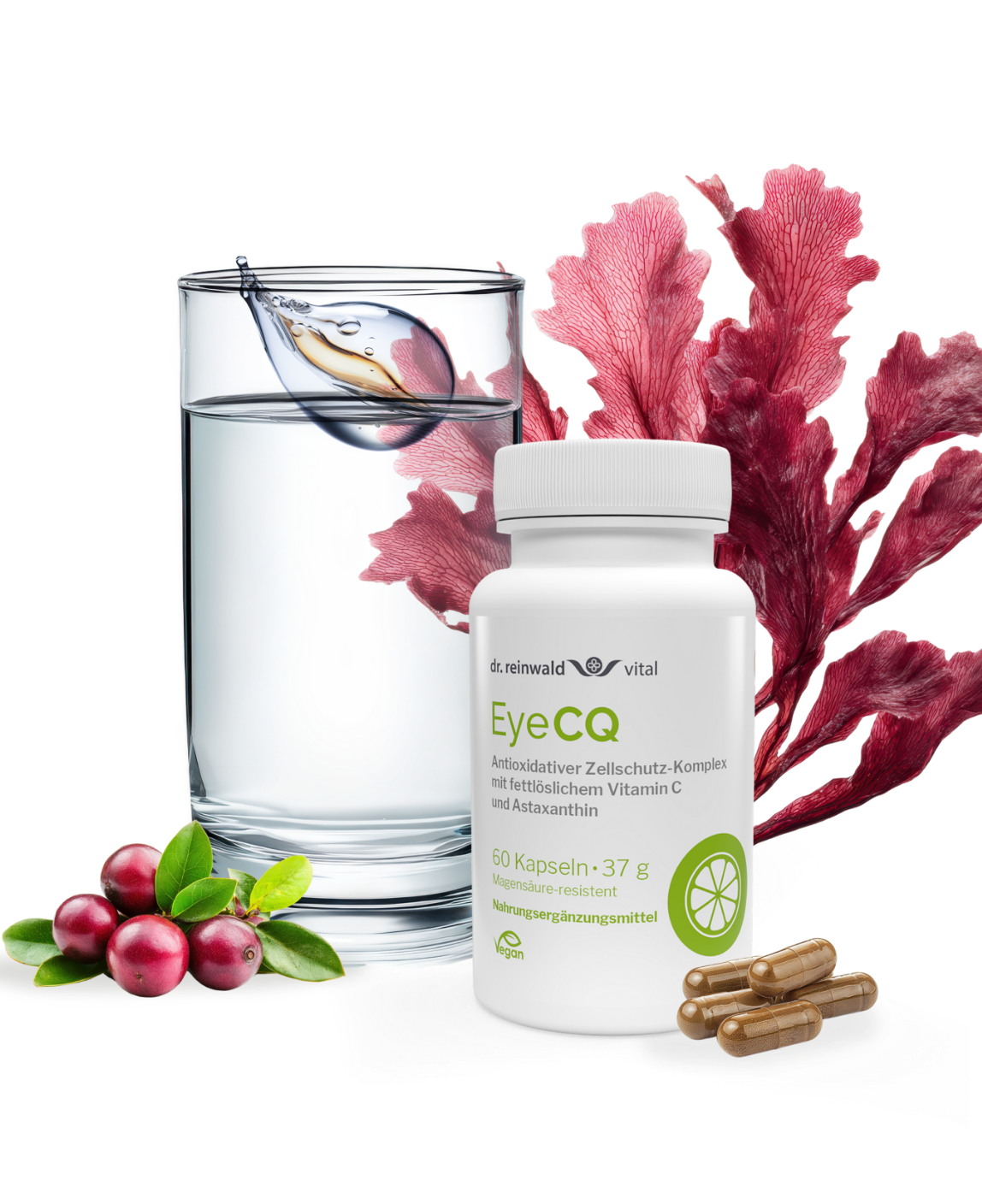
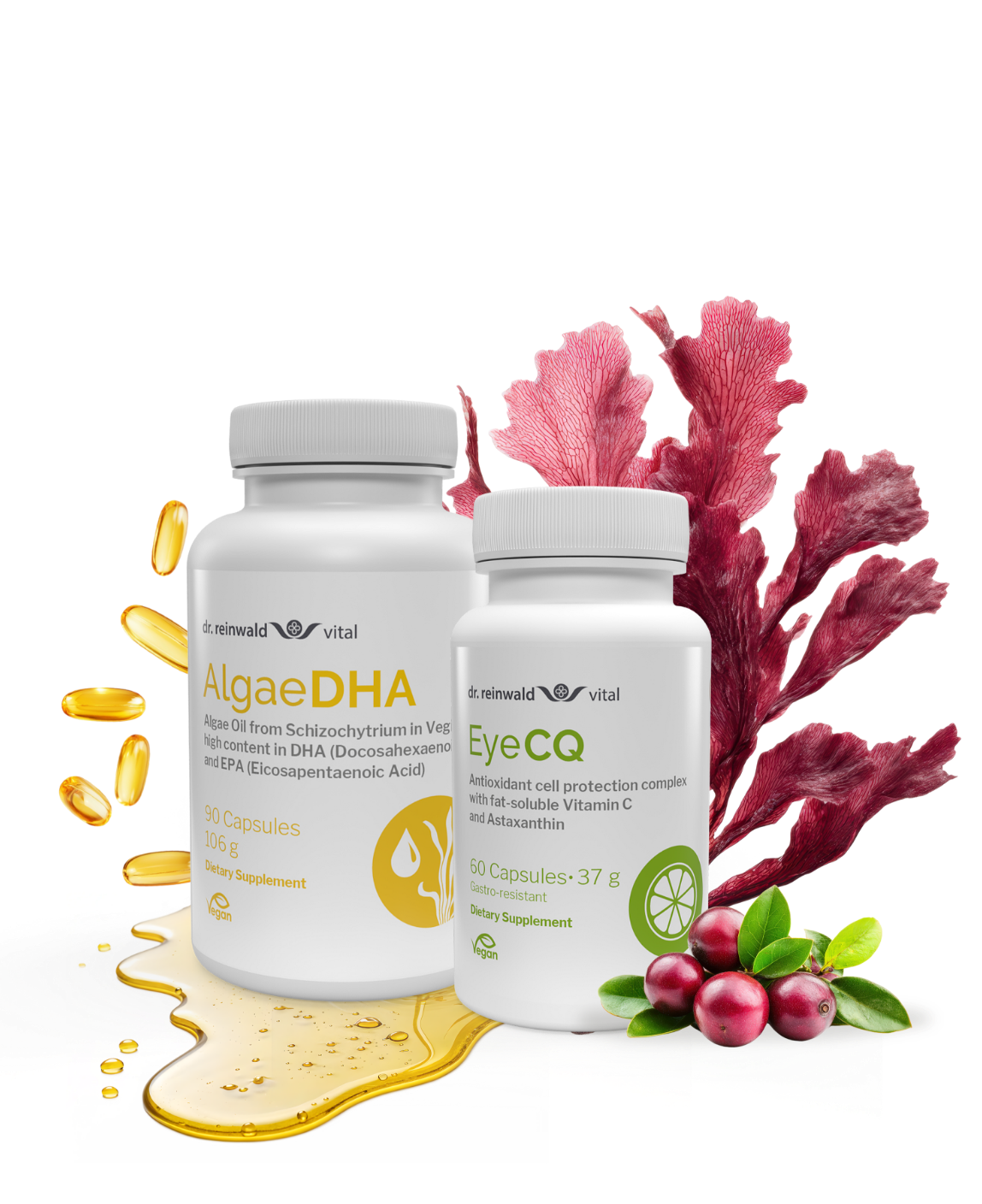
Our specially developed antioxidant cell protection complex EyeCQ uniquely combines fat- and water-soluble vitamin C, astaxanthin, coenzyme Q10, zinc, glutathione, vitamins A and E with active hydrogen. It effectively protects cells, especially in our sensory organs and in our brain, from oxidative stress.
Why fat-soluble vitamin C?
Fat-containing tissue is found especially in the brain, nervous tissue, and our eyes. Water-soluble compounds, such as water-soluble vitamins, are repelled by the lipid (fat-containing) cell walls. To supply the fat-containing lipid layers of the cells in our brain and sensory organs, we therefore need fat-soluble substances.
4. Ketogenic Nutrition for Your Brain Health
Our brain is the organ with the highest energy requirement. Since it cannot store energy, it must be supplied regularly and, above all, sufficiently. And that is no small amount: our brain claims about one fifth of what we take in as food and breathe in for itself—even though it accounts for only about two percent of our body weight!
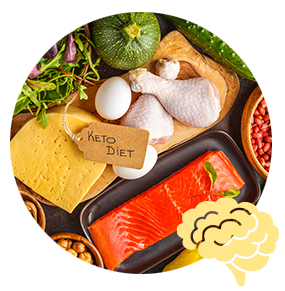
And here we can immediately clear up one of the biggest nutrition myths of recent years. Namely, the fairy tale of healthy carbohydrates—the supposedly scientifically based superstition that our brain can only use glucose and can only fall back on ketones in times of emergency. But that is anything but true and correct! Ketones can also provide the necessary energy for our brain. A low-sugar, low-carbohydrate diet—in other words, a ketogenic diet—not only has positive effects on your entire organism, metabolism, and sensory perception, it also has one decisive advantage for your brain health: energy metabolism is more efficient than sugar metabolism and also produces fewer free radicals!
By the way: dextrose, which is often touted as promoting concentration, is also a complete misconception. Since sugar or dextrose is immediately utilized by our body, it does provide a short energy boost, but afterward performance and concentration rapidly drop again!
5. Keep Your Nerve Cells Supple: Omega-3 Fatty Acids
As important components of the nerve cells in our brain, omega-3 fatty acids not only promote smooth transmission of stimuli, they also support functioning energy metabolism and optimal blood circulation. The two most biologically active omega-3 fatty acids, docosahexaenoic acid (DHA) and eicosapentaenoic acid (EPA), are particularly important for our brain health. DHA is also the most abundant fatty acid in our photoreceptor cells. It influences the structure of the retina and thus the maintenance of normal vision. If our body receives too little DHA and EPA, this has a negative effect on our nerve cells, our eye health, and brain performance. DHA and EPA are found exclusively in cold-water sea fish and algae.
Many omega-3 fatty acid sources can also be found in foods that are more common in our diet, such as flaxseed, walnuts, flaxseed oil, walnut oil, or rapeseed oil. These contain alpha-linolenic acid (ALA), another omega-3 fatty acid, but it is bioavailable only to a very small extent. Since our brain needs large amounts of omega-3 fatty acids, it can hardly make use of these sources. That is why fish oil or algae oil is the better choice for our brain than flaxseed oil. Because here, too, it is not the quantity but the quality that matters!
This is where our AlgaeDHA comes in. The high-dose omega-3 capsules made from sustainable algae oil offer a high content of DHA and EPA—ideal for daily nutritional enhancement. The advantage of AlgaeDHA: it is not only ideally suited for vegetarians and vegans, but unlike fish oils, it achieves the highest purity because algae are hardly affected by pollutant accumulation.
PerfectBRAIN by dr.reinwald vital – Your Booster for Brain and Sensory Organs
The focus & resilience package consisting of EyeCQ and AlgaeDHA provides you with everything you need for optimal support of your nerve cells, your brain, and your sensory organs!
- The omega-3 fatty acids DHA and EPA from a sustainable, plant-based source with optimal bioavailability for good brain function and the maintenance of normal vision
- Water- AND fat-soluble vitamin C for optimal support of the lipid layers of your cells in the brain and sensory organs (especially your eyes)
- Powerful antioxidants in the form of bioflavonoids, vitamins A and E, astaxanthin, coenzyme Q10, reduced glutathione, Active H® and zinc for effective and lasting protection of your cells against oxidative stress
- Vitamin A for maintaining your normal vision by day and night